

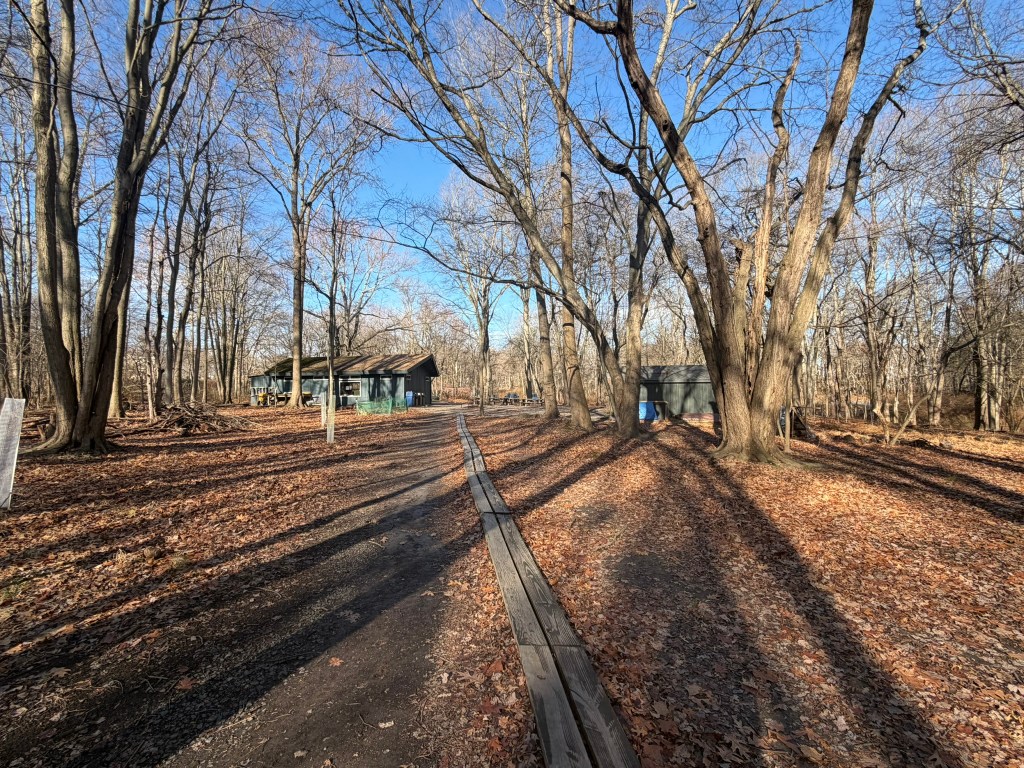
In a letter to MyRye.com, Teresa Vega, a genealogist, historian, and writer whose work focuses on Indigenous, African, and Afro-Indigenous histories in the Northeast and Mid-Atlantic, argues the work proposed by the Westchester County Parks in the Marshlands Conservancy is “an act of historical violence” and “should alarm anyone who cares about history, justice, or the environment”. For more context, see: Skepticism and Calls for Transparency Greet Marshlands Conservancy Expansion Plans.
The letter:
The Politics of Erasure: When Anniversaries Matter More Than Ancestors
For more than 400 years, my family has maintained ties to Lenapehoking, the ancestral homelands of the Munsee Lenape along the Hudson River and Long Island Sound. Our history is not distant. It is living. It is rooted in Indigenous, African, and Afro-Indigenous communities who navigated colonialism, enslavement, resistance, and survival in what became New York and Connecticut.
That is why the proposed development at Marshlands Conservancy in Westchester County should alarm anyone who cares about history, justice, or the environment.
We live in an era saturated with commemorations. The Dutch arrival. American independence. Emancipation. Each marked by plaques, panels, reenactments, and glossy articles. Yet at the same time, the physical evidence of Indigenous and African American life is being erased from the landscape. This contradiction is not accidental. It reflects a long-standing pattern in American public history.
At Marshlands Conservancy, a proposed project threatens one of the earliest known Indigenous and Afro-Indigenous burial grounds in the region, as well as gravesites and material culture associated with enslaved and Free People of Color. It also places at risk a historic animal cemetery that reflects Indigenous worldviews rooted in reciprocity between humans, animals, and land. As institutions rush to celebrate sanitized versions of the past, they quietly allow inconvenient histories to disappear.
Erasure is not new. It is cyclical.
In recent years, across political administrations and party lines, public history has increasingly been stripped of its racial and colonial context. Enslavement is softened into labor. Genocide is reframed as settlement. Critical scholarship is dismissed as divisive. What follows is a familiar retreat into comforting myths during moments of national anxiety.
We have seen this before. After the Civil War, the Lost Cause myth transformed enslavement into benevolence and rebellion into honor. Cemeteries, monuments, and textbooks worked together to rewrite the past. Today’s racial sanitization follows the same logic. When the present feels unstable, the past is rewritten to feel safe.
The debate over Marshlands Conservancy demonstrates how this operates locally. While people across the political spectrum have both supported and opposed the project, the underlying pattern of historical erasure persists regardless of party affiliation. Burial grounds remain vulnerable. Indigenous and African American presence remains negotiable.
This matters because burial grounds are not symbols. They are archives. They hold knowledge that no plaque or article can replace. To disturb them without full environmental, archaeological, and cultural review is not simply poor planning. It is an act of historical violence.
The presence of an animal cemetery deepens this concern. For many Indigenous cultures, animals are not property. They are relations. They are teachers. To erase animal burial sites alongside human ones is to erase Indigenous ecological knowledge itself, replacing it with a colonial hierarchy that values development over life.
Who controls the narrative controls the landscape. Recently published local historical articles illustrate how Revolutionary War myths continue to dominate public memory while Indigenous and African American lives are minimized or omitted. These narratives do not merely interpret the past. They justify present-day decisions about which histories deserve protection and which can be paved over.
Anniversaries can inspire reflection, but they can also distract from accountability. When celebration replaces reckoning, history becomes performance rather than responsibility.
Marshlands Conservancy is not just a local zoning issue. It is a test of whether we are willing to protect the physical evidence of the past, even when it complicates our stories. It asks whether anniversaries will continue to matter more than ancestors.
Erasure thrives when it goes unquestioned. Memory survives when it is defended.
Sincerely,
Teresa Vega
Teresa Vega is a genealogist, historian, and writer whose work focuses on Indigenous, African, and Afro-Indigenous histories in the Northeast and Mid-Atlantic. She has traced more than 400 years of family ties to Lenapehoking through traditional archival research, genetic genealogy, oral history, and material culture. Her writing examines public history, historical erasure, and the ethics of preservation, with particular attention to burial grounds and cultural landscapes. She is currently preparing two books on Indigenous and African American history in the pre- and post-Revolutionary War era.

In Arizona (my original home), it is illegal to destroy prehistoric and historic evidence. Is that not the case in New York? The County at the very least needs to prepare and make public an environmental (including cultural) impact study of the proposed site.
Thank you for sharing.
Ms. Vega is ???? on point here. This is a call to equity as fairness and justice. The semantics of erasure happen in words, then in curricula, then is perpetuated into truth over centuries. If every human is equal, why can’t we be treated as such? We aren’t able to identify the names of our ancestors in records prior to 1870 (in many cases) and the true genealogical lineages of them back into their tribes/people/countries of origins? Because European men ensured it.
It wasn’t the crack of marse’s whip, or being equated with a pair of shoes up until 1865 that hurt us descendants the most, it was our erasure and the Euro-based institutions complicit behavior in keeping those doors closed to us.
This isn’t a guilt trip we are thrusting upon America. It’s the discovery of our identities and the muted screams of our ancestors.
Brava Ms. Vega and Mr. Sears.
I must quote, civil rights leader Fannie Lou Hammer ” I’m sick and tired of being sick and tired” of the continues disrespect to people of colored. The appalling attempts to alter history with the elimination of our ancestors existence.
My heritage trace back to African and African-Indigenous ancestors from Rye, Marshland, including enslaved people, America Revolutionary Veterans, and free people of color. Historian Teresa Vega, article tells our mutual family complex history in New York and Connecticut. The descendants view her as the chosen by our ancestors to serve as the spokesperson who will renew and safeguard family history. She has our full support to make the public aware of the repetive nature to erasure people of colored contributions that predated 1776, before the formulation of the United States of America.
When does it all stop. Removing history is not right.
What is so bizarre about this project is the complete lack of any local desire or need being demonstrated for it. The community that uses Marshlands is perfectly happy with its current state so far as I can tell. Frankly its less developed nature without being dominated by a huge building is part of the charm and driving large amounts of traffic into a culturally environmentally sensitive area also seems counter productive. Theres no specific need being addressed, let alone one requiring plans this extensive. Is this just spending money because they have money? Who is benefiting from a project so divorced from local support, feedback, contributions or participation?
Thank you for exposing this issue, Ms. Vega. Sadly, I can’t say I’m surprised to learn that YET AGAIN, Afro-Indigenous history is being erased with careless disdain. Please don’t let up and keep your flashlight fixed on what’s happening at the Marshlands Conservancy.