

RyeGPT People of Note is a series highlighting individuals who have a connection to the City of Rye. In the series we ask OpenAI’s ChatGPT to prepare a biography and explain the individual’s connection to Rye.
We welcome your feedback on this series – the use of artificial intelligence, the accuracy and usefulness of each article and your assistance in understanding other pertinent insights related to the person’s connection to Rye.
You can add comments at the bottom of each article or you can send feedback via Tips & Letters.
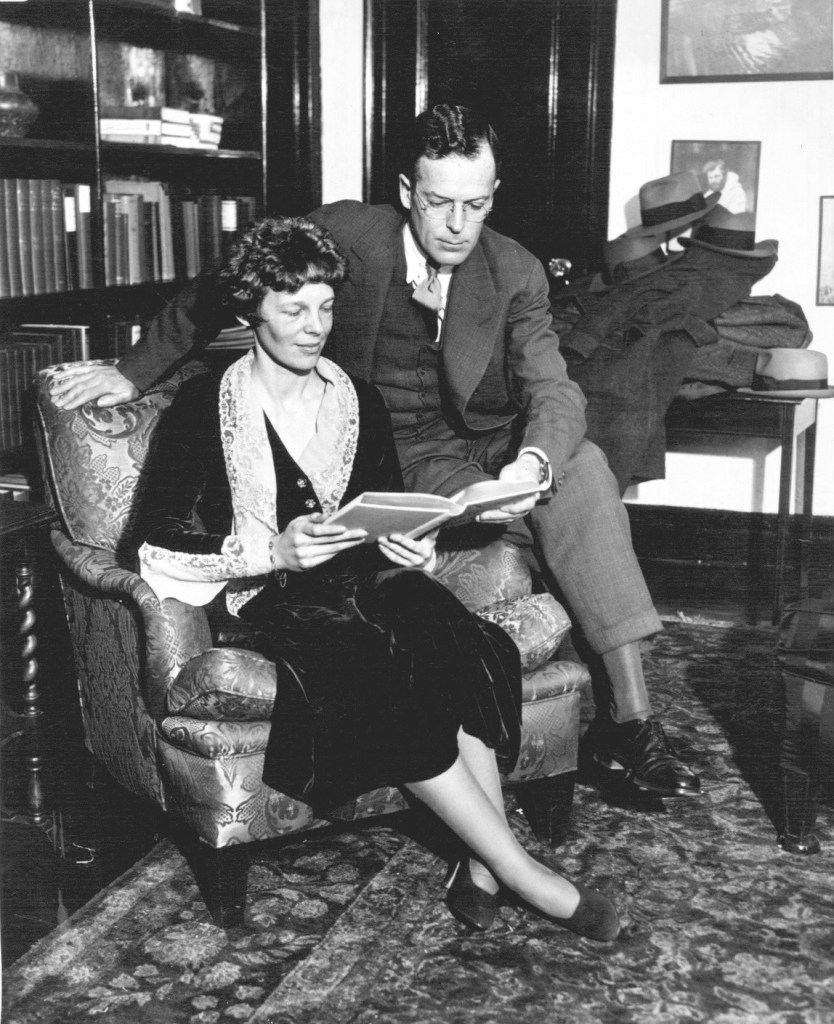
George Palmer Putnam (1887–1950) was an American publisher, author, and explorer best known for his influential role in the world of aviation and publishing in the early 20th century. He gained national prominence not only for his work in the literary world but also for his close association with pioneering aviator Amelia Earhart, whom he married in 1931.
Early Life and Career
George Putnam was born on September 7, 1887, in Rye, New York, into the distinguished publishing family that founded G.P. Putnam’s Sons. He was raised in a milieu steeped in literature and journalism. Though much of his early career took place on the West Coast and in New York City, Putnam retained personal and family ties to Rye throughout his life. He served in WWI for the U.S. Army in 1918.
Putnam began his career as a newspaper reporter and later managed publishing houses on both coasts. He was instrumental in promoting the careers of prominent authors and explorers, including Charles Lindbergh and Robert E. Peary. His deep interest in aviation, adventure, and exploration shaped the catalog of books he championed as a publisher.
Role in Amelia Earhart’s Career
Putnam’s most lasting legacy is arguably his support of Amelia Earhart’s aviation career. In 1928, he helped organize and promote her transatlantic flight aboard the Friendship, where she became the first woman to fly across the Atlantic (as a passenger). Putnam acted as her publicist and promoter, shaping her image as “Lady Lindy” and securing major sponsorships and lecture tours.
Their professional relationship evolved into a romantic one, and the two were married on February 7, 1931. Earhart famously referred to their marriage as a “partnership with dual control,” emphasizing their shared commitment to independence and mutual respect. Though Earhart kept her own name after marriage, their union was one of the most publicized of their time.
Connection to Rye, New York
For many years, Putnam lived on a four-acre estate on Locust Avenue in Rye. According to a NYT article from 1939, he bought the property in 1923, moved into the newly-constructed house in 1925, and renovated it after a fire in 1934. He eventually sold the property in 1939. The main house consisted of sixteen rooms, six bathrooms, two large living rooms, and a fireplace.
Another 1939 NYT article writes that Putnam hadn’t returned to his Rye property after Amelia Earhart disappeared in 1937 during her attempt to circumnavigate the globe. Instead, he moved permanently to California.
“In the dwelling are many reminders of Miss Earhart,” the article states. “A wall of one room is papered with aviation maps she had used. A closet contains trophies and mementoes of her aerial exploits. The gardens are partly of her design.”
Later Life and Legacy
After Earhart’s disappearance, Putnam was deeply affected. He spent years searching for answers and ultimately published Soaring Wings, a biography of Earhart, to commemorate her life and achievements. He continued to work in publishing and briefly served as a consultant to the U.S. Navy during World War II.
George Palmer Putnam died on January 4, 1950, in Trona, California. He is remembered not only as a scion of a literary dynasty but also as a key figure in promoting early aviation, and for his enduring personal and professional partnership with one of history’s most iconic women.