

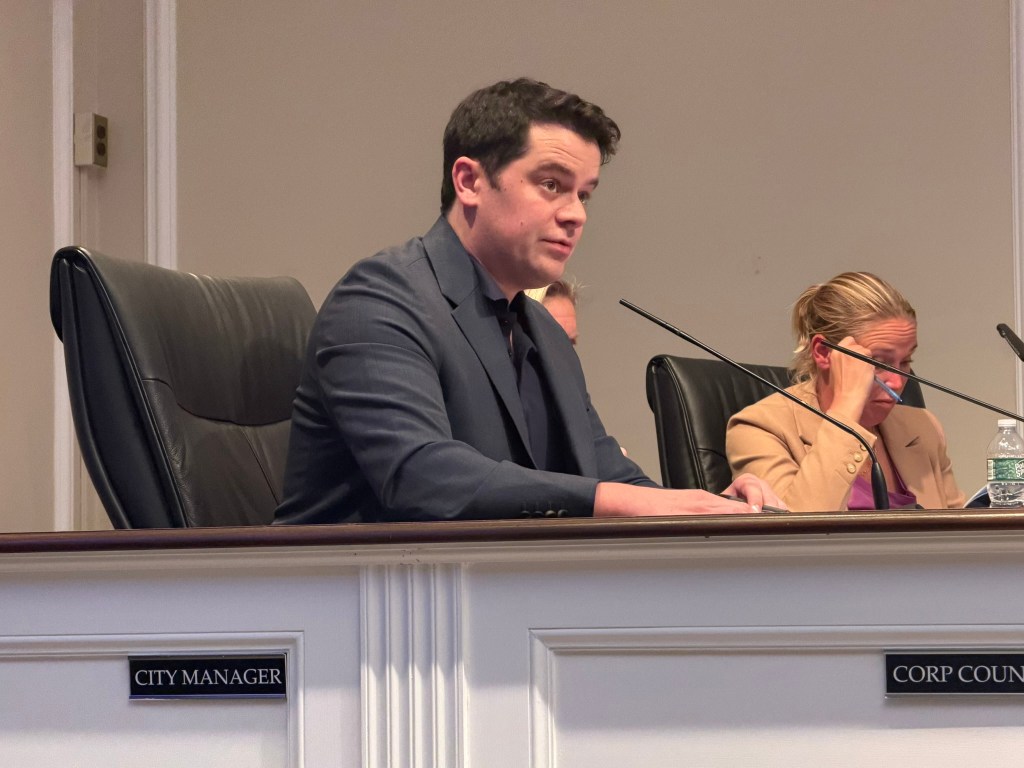
The City of Rye kicked off the 2027 budget season at the council meeting on Wednesday evening, November 4, 2026. What follows will be a number of budget work sessions and council meetings where different parts of the budget will be discussed and workshopped.
All those conversations will culminate in a public hearing on the budget at the city council meeting on December 2 and a vote on the City of Rye 2027 budget at the city council meeting on December 16.
The headline: Residents are looking at a proposed tax increase of 8.49%. This represents an actual dollar increase of $499 for the average homeowner in Rye. This is slightly below last year’s tax rate increase of 8.78%.
“The financial challenges confronting the city in 2027 are similar to those we faced during the 2026 budget cycle,”said City Manager Brian Shea as he kicked off the budget presentation. “We continue to experience significant growth in mandated… expenses, including health insurance, pension contributions, and contractual obligations, while growth in non-property tax revenues remain limited.”

A bit more: The average tax bill in Rye is $32,941. 60% of this, or almost $19,000, is attributable to the Rye City School District. 20% of this, or about $6,700, is attributable to Westchester County. 19% of this, or $6,000, is attributable to the City of Rye and a final 1% or so, or $295, is attributable to the library tax.
Total general fund operating expenditures for the City of Rye for 2027 are proposed to be $58,325,729. This is an increase of $3.9 million over 2026. Salaries, benefits, and taxes together represent 72% of the budget. The functions consuming the greatest portion of the budget are public safety at 34% (which is inclusive of police and fire) and overall employee benefits at 29% of the budget.
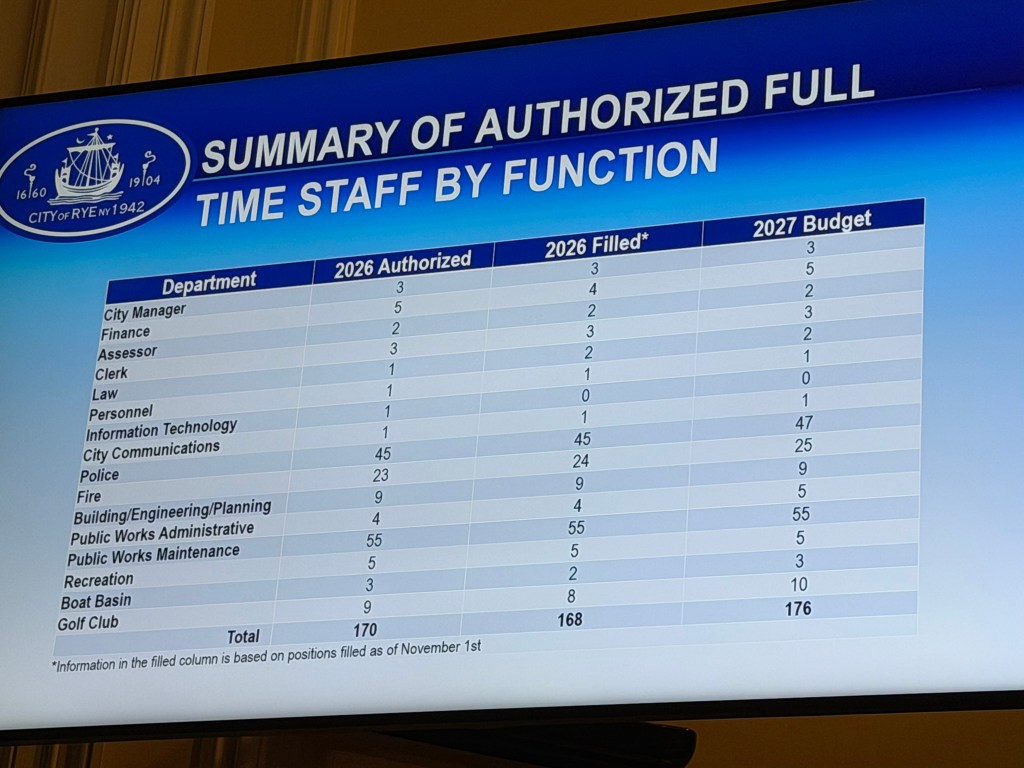
City staff is proposed to go from 170 to 176 employees. The six additional employees are being allocated: two to the police department, two to the fire department, one to the golf club, one to public works.
There are a myriad of cost drivers, including medical expenses for active and retiring employees increasing, retirement expenses increasing, and non-tax revenues not keeping pace with the increase in personnel costs. Provided this trend continues, there will be continuing pressures on raising property taxes.
The largest non-property tax revenue generators for the city are sales tax (the city gets a portion of county tax collected), which amounts to a 2026 year projection of nearly $5 million, and building permit revenue, with a 2026 projection of $2.1 million. The other larger categories are state aid, mortgage tax, and interest income.
Watch the 2027 budget presentation:
