

Holding Court is a series by retired Rye City Court Judge Joe Latwin. Latwin retired from the court in December 2022 after thirteen years of service to the City.
What topics do you want addressed by Judge Latwin? Tell us.
By Joe Latwin

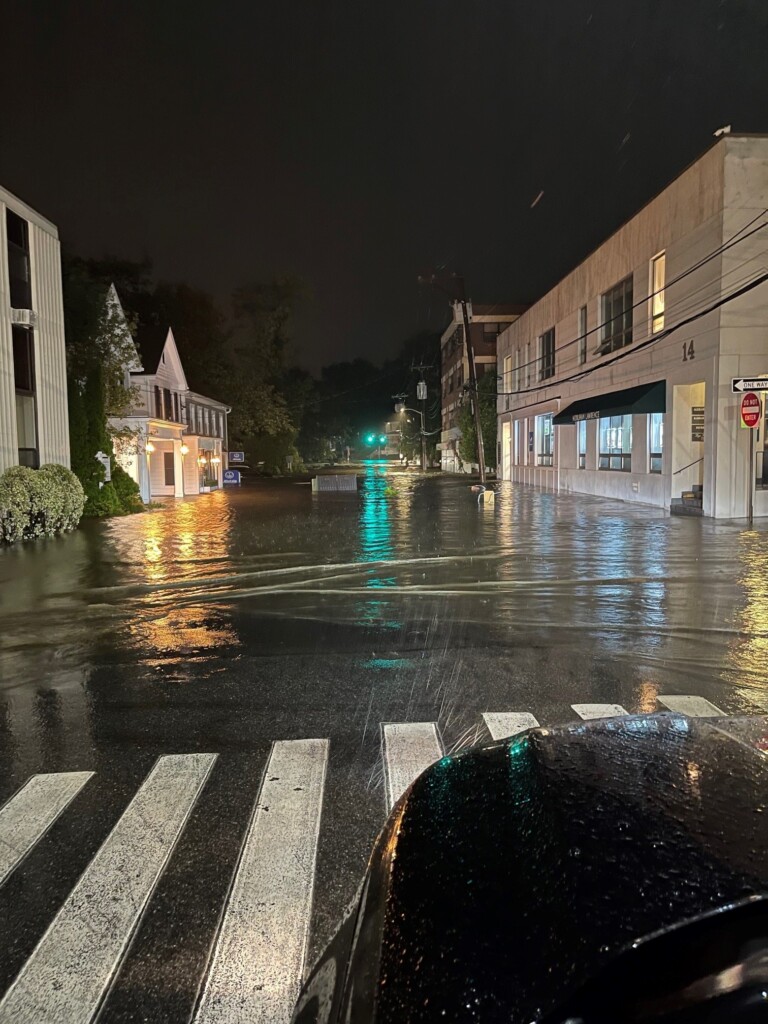
It should come as no surprise to anyone living in Rye that our City is prone to flooding in several locations, including along Long Island Sound and Blind Brook. I have personally stood guard on Milton Road near the Milton Point Fire House directing traffic away from Milton Road when it was flooded from Dearborn Avenue past the Boat Basin. I told drivers that if they got stuck, we might not be able to get them out, and I warned pedestrians that there were reports of sea snakes in the waters – enough to discourage the adventurers. But what of the homeowners? The standard homeowners’ insurance does not cover flood damage. You might need separate flood insurance. In fact, practically all property insurance policies specifically exclude the peril of flood damage. If you want to be covered from flooding loss, you have to purchase flood insurance separately.
There are two ways to get flood insurance: One is FEMA, the Federal Emergency Management Agency, and the other is from a private insurance company. A flood insurance policy through FEMA comes from the National Flood Insurance Program (NFIP). You can apply through FEMA’s web site. Since Rye follows FEMA guidelines, NFIP policies are available in Rye. The other way is from a private insurance company almost exclusively offered by licensed independent insurance agents or brokers. Occasionally, a company may sell you a policy directly.
The NFIP policy will provide up to $250,000 for the structure and $100,000 for the contents of your property. That’s it – not enough to compensate you if your million-dollar home and your precious belongings are soaking in your newly acquired indoor pool. The NFIP policy will cost about $900 per year on average but higher in flood prone areas. Since private insurance companies can offer any type of coverage they wish, you may be able to get coverage up to the full amount needed to rebuild your home. At least, you may be able to select an amount upfront that is significantly higher than $250,000. Also, private insurers may provide the chance to purchase more coverage for personal property than $100,000 and include limited coverage for artwork and collectibles beyond the NFIP limit of $2,500. Private policies average about $1,075 per year. Many policies exclude cars; property kept in basements; and swimming pools.
To assess your risks, FEMA and private insurers often rely on FEMA’s flood maps to determine the probability of flood damage. These maps are available at City Hall and will rate the flood zone in which your property is located. These maps are historical and don’t guarantee you won’t be flooded if you are not in a high-risk area. In fact, 25% of flood losses happen in homes outside of high-risk areas!
If you have a mortgage, chances are you were required to obtain and maintain a flood insurance policy if your property is at risk of flooding.
Whatever you do, if you are told to evacuate, go! Your property is not worth your life. Your stuff can be replaced. Remember, if you choose to jeopardize yourself, you may also be putting the lives of first responders who come to rescue you at risk.