

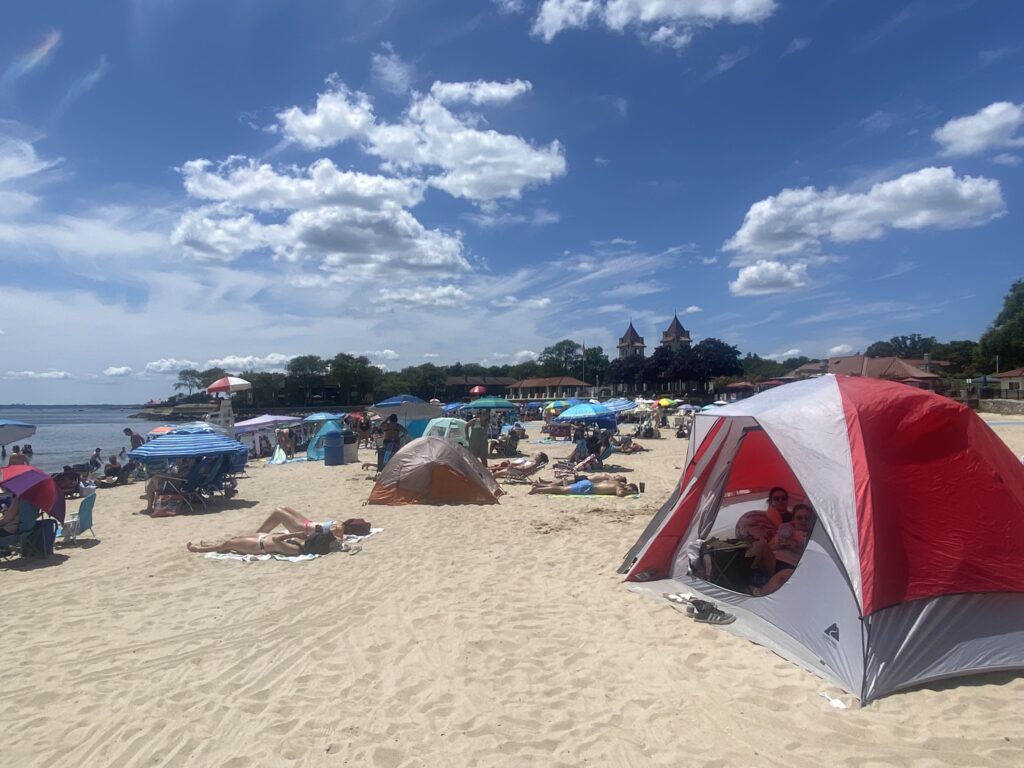
If Oakland Beach at Rye Town Park were a student, it might be headed for summer school.
One of only five publicly accessible beaches along the Westchester shoreline, the beach has received a “D+” in the biennial beach report issued by local environmental group Save the Sound. Playland Beach, just adjacent to Oakland Beach, is only a slightly better remedial student, with a “C+” in the group’s ongoing 20 year study of our local waters.
“Climate change is very real. It’s happening,” said Peter Linderoth, director of healthy waters and lands for Save the Sound. “We have more intense and frequent storms, and with those more intense and frequent storms, we’re having more and more polluted water make its way to our beaches.”
It’s absolutely imperative that we… adapt to climate change, update sewer systems, both sanitary and stormwater sewer systems, so that we don’t see big slugs of polluted water going directly to the shoreline after rain events.”
Lawsuit, Sewer Upgrades
Save the Sound sued Rye and other sound shore communities in 2015 demanding improvements to sewage systems. Rye and other communities settled the lawsuit and initiated sewage system upgrade work. But Save the Sound has not accepted the local work as delivered by Rye under the settlement. The City and environmental group are negotiating behind closed doors on what work, if any, remains to be done.
Beach Grades, Fecal Matter, Rain Events
Save the Sound’s beach grades are derived from data gathered by local beach managers, who are required by state law and the federal Beaches Environmental Assessment for Coastal Health (BEACH) Act to monitor for Enterococcus, the fecal indicator bacteria genus used to determine whether the water quality at a given saltwater beach in New York or Connecticut is safe for swimming.
The most common reason for beach closures is when Enterococci levels in water samples exceed the state-established criteria, exposing swimmers to pathogens that can cause a variety of symptoms and could result in illnesses of the upper respiratory tract, hepatitis, Giardia infection, to name a few, as well as minor skin eye, ear, nose, and throat irritations.
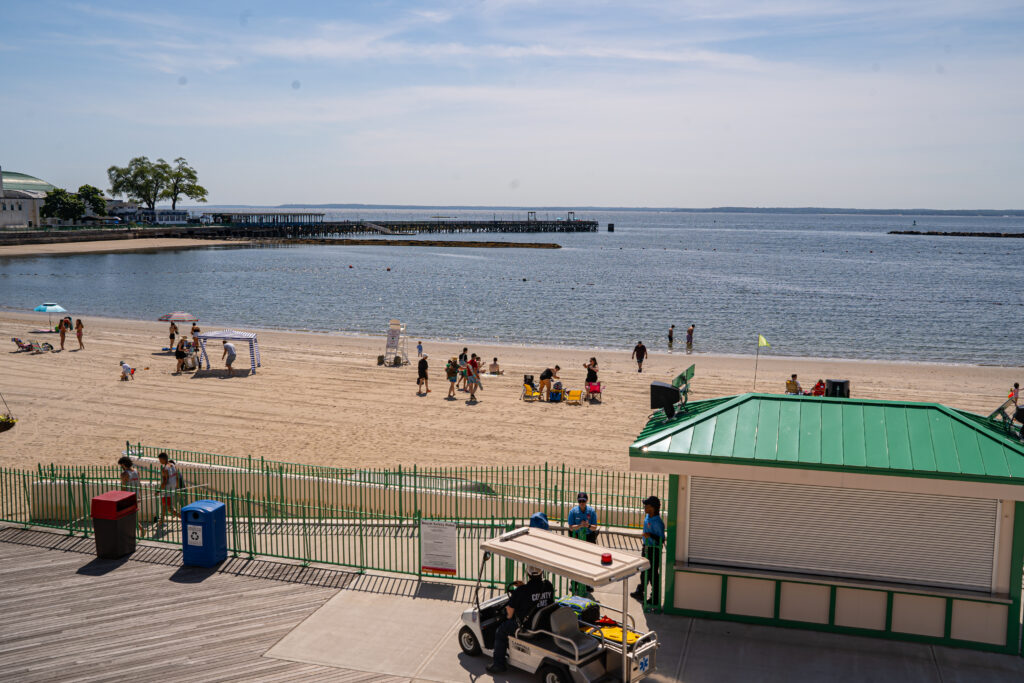
The biggest concern – and most closures – come after larger rain events. At Oakland Beach, 30% of samples failed after wet weather testing. At Rye Playland Beach next door, that failure rate is 38%. Oakland Beach also saw 18% of samples fail after dry weather.
“[Water] should be infiltrated into the ground as much as possible, and let nature do the rest,” continued Save the Sound’s Linderoth. “As it gets down to the groundwater, it’s naturally treated, and it slows down that flow of water, so that when it does meet up with streams and tribs [tributaries] in the Sound, it’s already gone through what we call ecosystem services – just natural processes that will help treat the water. Green infrastructure is really valuable for that – when you look at rain gardens, bio swales, bio retention basins.”
What Can Local Residents Do?
Asked what concerned individuals and families can do, the group suggests various actions to increase water absorption on your property – put in rain gardens, rain barrels and plant native. Linderoth also recommends speaking to local elected officials: “a dozen, two dozen, 100 concerned residents, their voices can go a long way towards encouraging more action to improve water quality”.
Read the 2025 Long Island Sound Beach Report by Save the Sound.
