

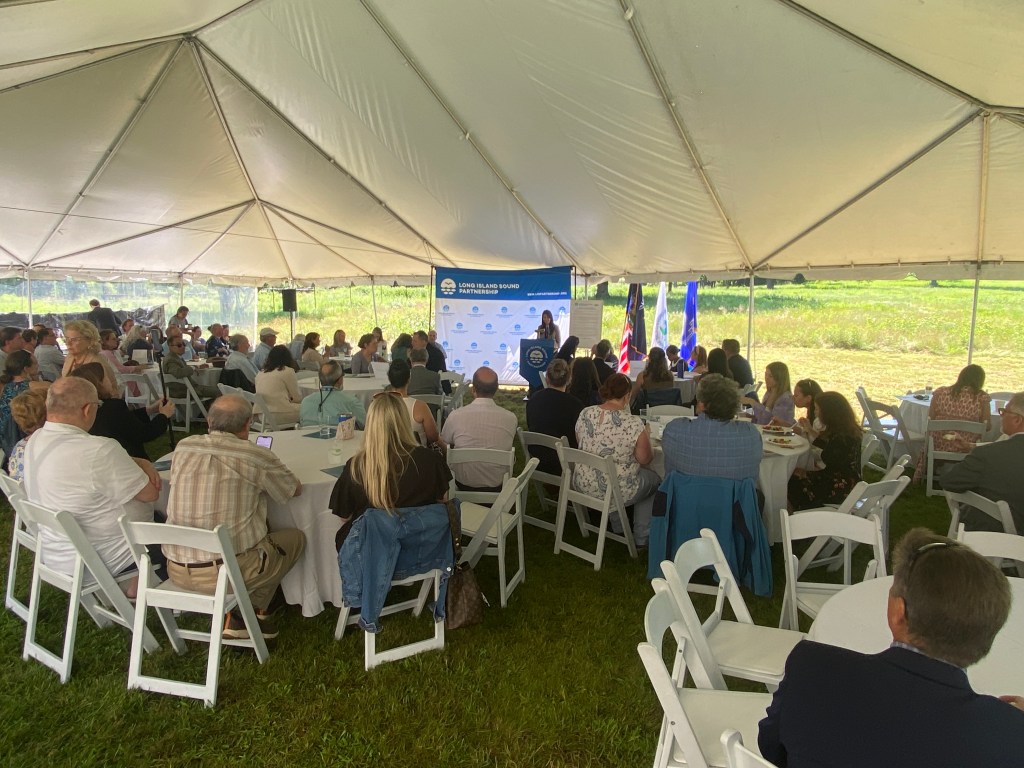
Federal, state and local officials came together this Friday morning, June 20th, 2025 at Jay Heritage Center in Rye to celebrate the 40th anniversary of the Long Island Sound Partnership (LISP)’s conservation efforts and sign the new 2025 Comprehensive Conservation and Management Plan (CCMP).
In 1985, New York and Connecticut formed the LISP, which consisted of federal and state agencies, user groups, and concerned organizations and individuals dedicated to addressing environmental damage in the Sound. The partnership works with local group Save the Sound and has an ongoing Living Shoreline Project for the Edith Read Wildlife Sanctuary (The Living Shoreline Project, implemented in 2021, includes improving resilience to sea level rise, improving water quality, and enhancing the habitats for coastal plant and animal species).
A Ten Year Roadmap
The meeting today celebrated 40 years of the partnership’s achievements in protecting and restoring the Long Island Sound as well as the unveiling of the third CCMP since 1994. The agreement sets a 10-year roadmap to revitalize the LIS as an ecological, economic, and recreational resource. The new plan includes four goals: clean waters, thriving habitats, sustainable communities, and public engagement.
Nancy Seligson, co-chair of the LISP Citizens Advisory Committee, highlighted the partnership’s important milestones: reduction of nitrogen levels by nearly 40 million pounds per year, the restoration of 2,400 acres of habitat, and the reopening of 448 miles of rivers to migratory fish, among other achievements.
“The Long Island Sound is one of the most stressed estuaries in the country,” Seligson said. “7% of the population of the United States of America lives within 50 miles of Long Island Sound.”
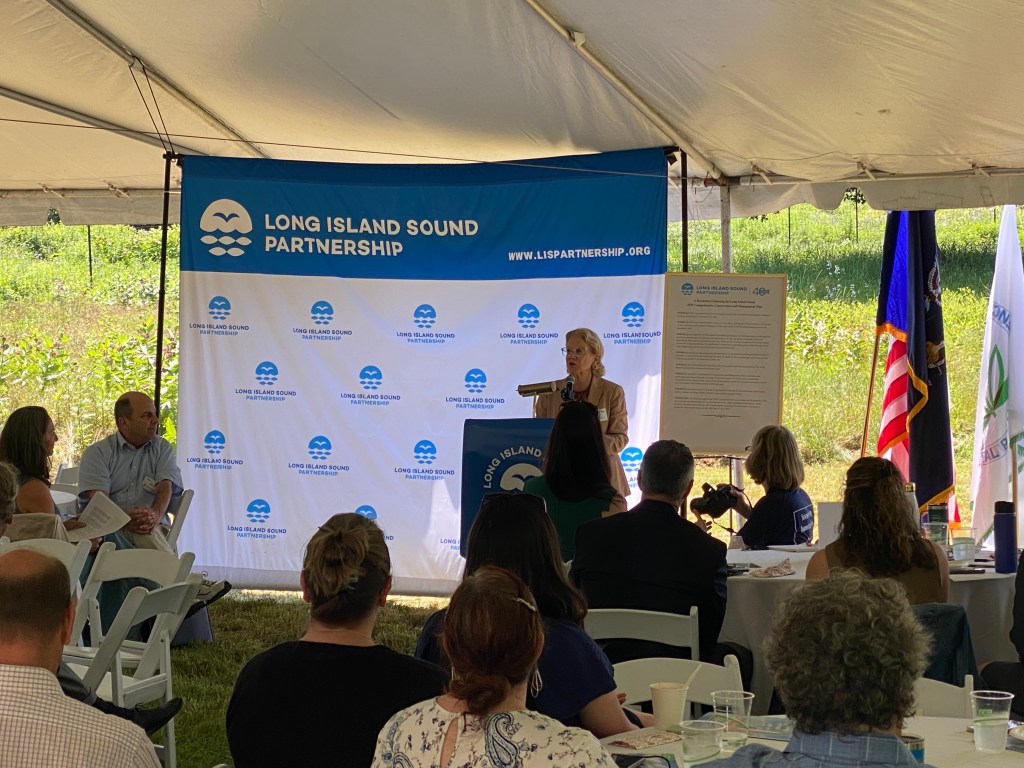
Regional EPA administrators, state commissioners, and congressional representatives followed Seligson’s opening remarks. Senator Shelley Mayer, who passed the “Living Shorelines” legislation in 2023 in New York, spoke on the importance of public engagement to ensure the continued restoration of the Sound. “We need to continue to educate people about the need for the Sound to be a wonderful resource for this community,” she said.
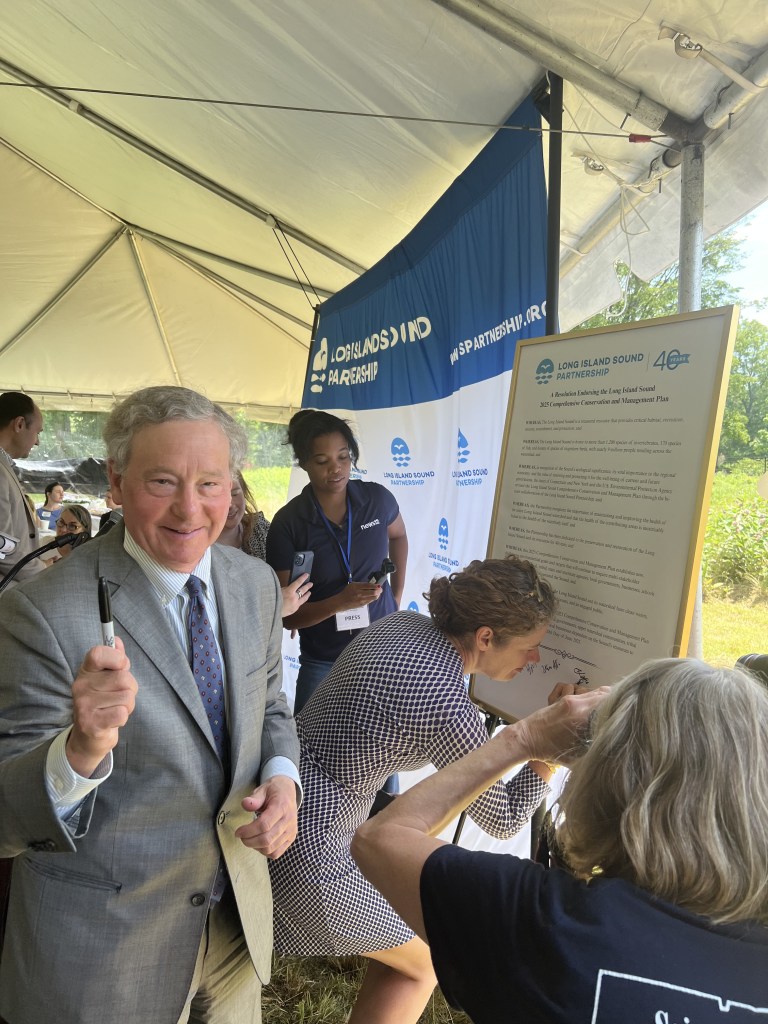
Seligson then introduced Assemblyman Steven Otis, who has been instrumental in setting up funding mechanisms in New York to improve the Long Island Sound, providing over $2.5 billion in water grants through the the Water Infrastructure Improvement Act of 2015. Otis was also the Mayor of the City of Rye for 12 years from 1998 to 2009 and a past chair of the City of Rye Conservation Commission. “We’re here to celebrate,” he told the attendees. “We’re also here to recommit ourselves to what we have to do going forward.”
Commissioner Katie Dykes of the Connecticut Department of Energy and Environmental Protection and Commissioner Amanda Lefton of the New York State Department of Environmental Conservation followed by discussing the success of the partnership’s collaboration and its role in driving investment and funding for restoration projects. “We get to celebrate this year $6 billion invested in water infrastructure since 2017,” Lefton said.
EPA Region 1 Administrator Mark Sanborn thanked and congratulated the work of the EPA staff, state partners, and the congressional and state legislative support. “This work showcases what we can achieve when federal, state, and local partners work together to safeguard clean water and healthy ecosystems for a prosperous community,” said EPA Region 2 Administrator Michael Martucci.
The U.S. Representative for New York’s 3rd congressional district Thomas Suozzi, a Long Island native, shared anecdotes about his connection to the Sound and noted the visible return of native species like red-tailed hawks and ospreys. The U.S Representative for Connecticut’s 4th congressional district Jim Himes reiterated Suozzi’s personal sentiments, expressing improvements in environmental education.

The U.S. Representative for New York’s 16th congressional district George Latimer closed off the morning session before the signing of the CCMP. He spoke about his connection to the Sound through the City of Rye. “My second date with my wife was a walk through the Rye Marshlands,” he said. “We walked down to see the inner harbor … and to see the beauty of the Long Island Sound.”
“It’s important to understand that this is an economic driver for the region, and it is the right environmental thing to do,” Latimer said.