

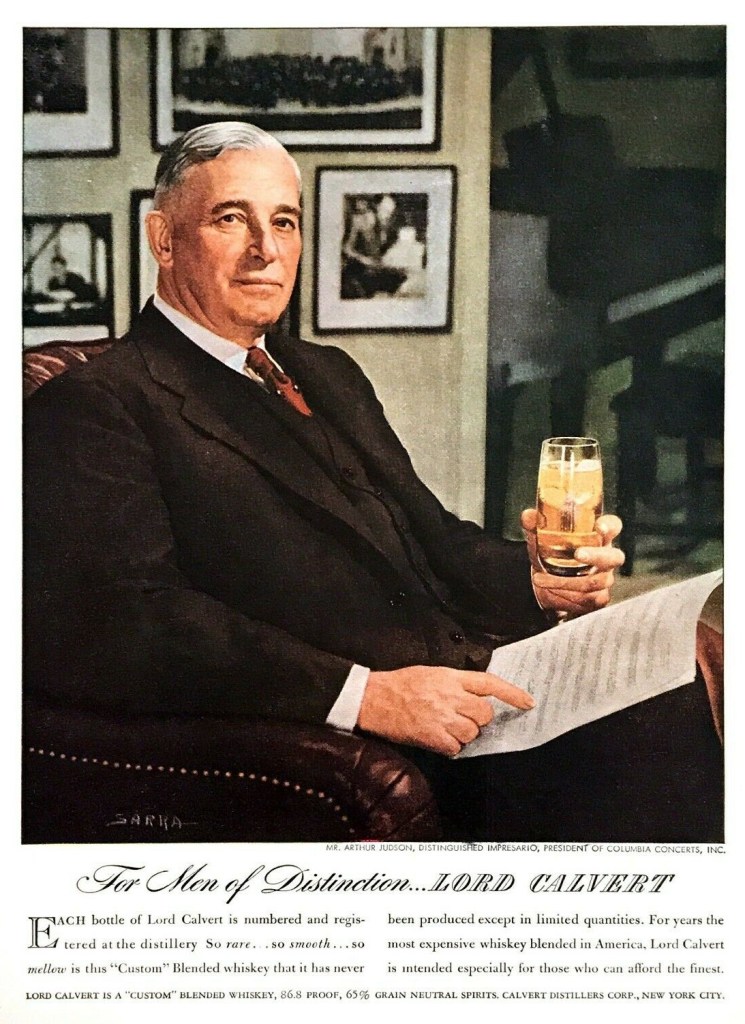
RyeGPT People of Note is a series highlighting individuals who have a connection to the City of Rye. In the series we ask OpenAI’s ChatGPT to prepare a biography and explain the individual’s connection to Rye.
We welcome your feedback on this series – the use of artificial intelligence, the accuracy and usefulness of each article and your assistance in understanding other pertinent insights related to the person’s connection to Rye.
You can add comments at the bottom of each article or you can send feedback via Tips & Letters.
Arthur Judson (1881–1975) was one of the most powerful and influential figures in American classical music during the first half of the 20th century. As a concert manager, orchestra administrator, and broadcasting executive, Judson helped shape the American cultural landscape by fostering the careers of major artists and founding institutions that continue to thrive today.
Early Life and Career
Arthur Leon Judson was born on February 17, 1881, in Dayton, Ohio. A violinist by training, he began studying the instrument as a child and later studied with violinists Max Bendix and Leopold Lichtenberg in New York before becoming dean of the music department at Denison University at the age of 19. While Judson began his career as a music critic, his organizational acumen quickly propelled him into arts management.
In 1915, he became manager of the Philadelphia Orchestra, and in 1922, he also took over as manager of the New York Philharmonic. Under his leadership, both orchestras achieved greater national prominence. In 1927, Judson helped found Columbia Artists Management, a powerhouse agency that represented some of the greatest classical musicians of the era, including Arturo Toscanini, Vladimir Horowitz, Jascha Heifetz, and Sergei Rachmaninoff.
In 1928, Judson played a central role in the founding of the Columbia Broadcasting System (CBS), where he served as a key figure in shaping the new medium of radio as a vehicle for promoting classical music to mass audiences. At the height of his power, Judson was simultaneously the most dominant concert manager in the country and the executive managing multiple major orchestras and artists.
Controversy and Decline
Despite his accomplishments, Judson’s immense influence attracted criticism. By the 1940s, many in the music world viewed his tight control over artist bookings and orchestra programming as monopolistic. In 1956, following mounting public scrutiny and antitrust pressure from the U.S. Justice Department, Judson retired from active management.
Connection to Rye, New York
Arthur Judson made his home in Rye, New York for much of his professional life. According to historical accounts and real estate records, Judson remained a Rye resident for several decades, maintaining his home there well after stepping down from his formal roles in the arts.
In 2018, Black Rock Galleries organized an auction for furniture and other valuables from the Judson Estate. The items included a large collection of Schmieg Kotzian furniture, vintage Ficks Reed bamboo sunroom suite, a pair of Dore bronze crystal mounted wall sconces, and a couple of Joseph Hirsh (American, 1910-1981) original pieces.
Later Life and Legacy
Judson passed away in 1975 at his home in Rye at the age of 93. Though his legacy is complex—marked by both cultural innovation and centralized control—there is no doubt that he left an indelible mark on American music. His contributions to the institutionalization of the arts and his vision for national classical music broadcasting helped lay the foundation for how Americans experienced high culture throughout the 20th century.