


Today meet mayoral candidate Josh Nathan.
Fall is underway, and that means elections are around the corner. The election will be on Tuesday, November 4, 2025, with early voting from Saturday, October 25, 2025 through Sunday, November 2, 2025. Our local early voting center is Resurrection’s Early Childhood Education Center at 88 Milton Road. You can find your election day voting location online.
In the City of Rye, there are active races for mayor and for three city council seats. Mayor Josh Cohn is ending two terms as mayor. Keith Cunningham, Jamie Jensen and Josh Nathan remain on the council with terms expiring December 31, 2027 (Nathan is running for mayor).
Bill Henderson, Julie Souza and James Ward have council terms expiring this December 31st (Henderson is running for mayor and Ward is running for council reelection).
Running for Mayor:
Bill Henderson (GOP)
Josh Nathan (Dem)
Rick McCabe (Ind)
Running for City Council:
Marion Anderson (Dem)
James Fee (GOP)
Robin Jovanovich (GOP)
Amy Kesavan (Dem)
Maria Shuck (GOP)
James Ward (Dem)
Now here is our MyRye.com interview with mayoral candidate Josh Nathan.
Your Name: Josh Nathan
Running for: Mayor
MyRye.com: Why are you running for Mayor?
Nathan: I am running for Rye City Mayor. The current Mayor is not seeking reelection; I am currently on the City Council.
I am running for Mayor for many of the same reasons I ran for Council: Rye is a fantastic place to call home, and I want to ensure that we protect what we all love about Rye; preserve the best, improve what needs it, and plan for what’s next so that Rye continues to serve its residents for years to come. Rye City government should always be a welcome partner for all the organizations in our community, a responsive advocate for our residents, and to continue to prioritize and address key infrastructure, neighborhood quality of life and public safety, and environmental matters (including flood mitigation and storm resilience) so that Rye continues to flourish.
I am keenly aware of Rye’s opportunities and challenges as a 25-year resident and from my 15 years of volunteer service (City Council, the Governor’s Office of Storm Recovery NYRCR Planning Committee for Rye, and my nine years of service on the Board of Education, including three terms as president).
Why are you running for Mayor now?
Nathan: I am running for Mayor now because I was asked to by people throughout the community who know my service to Rye and have spoken highly of my demonstrated good temperament for leadership. I am excited to address the priorities my running mates and I have heard expressed in countless conversations with residents:
- Prioritize neighborhoods by preserving character, enhancing recreation, getting cell service solutions, and protecting Rye’s quality of life including safety, environmental resilience, and quiet enjoyment.
- Combating flooding via infrastructure and planning, and working collaboratively with our sound shore neighbors, and with County, State and Federal officials.
- Comprehensive and sustainability planning for a vibrant downtown, safe streets for children and pedestrians, parking solutions, and a climate smart community meeting the needs of residents.
- Fiscal resilience in the face of cuts to federal spending in NY and increase costs of goods and services; holding the line on taxes through a smart and open budget process.
- Leading with transparency and consensus building; good governance starts with listening to you.
I look forward to serving as your Mayor, supporting our vibrant community and addressing challenges and opportunities for Rye in a fiscally responsible, transparent, and inclusive manner.
What is your party affiliation?
Nathan: Democrat.
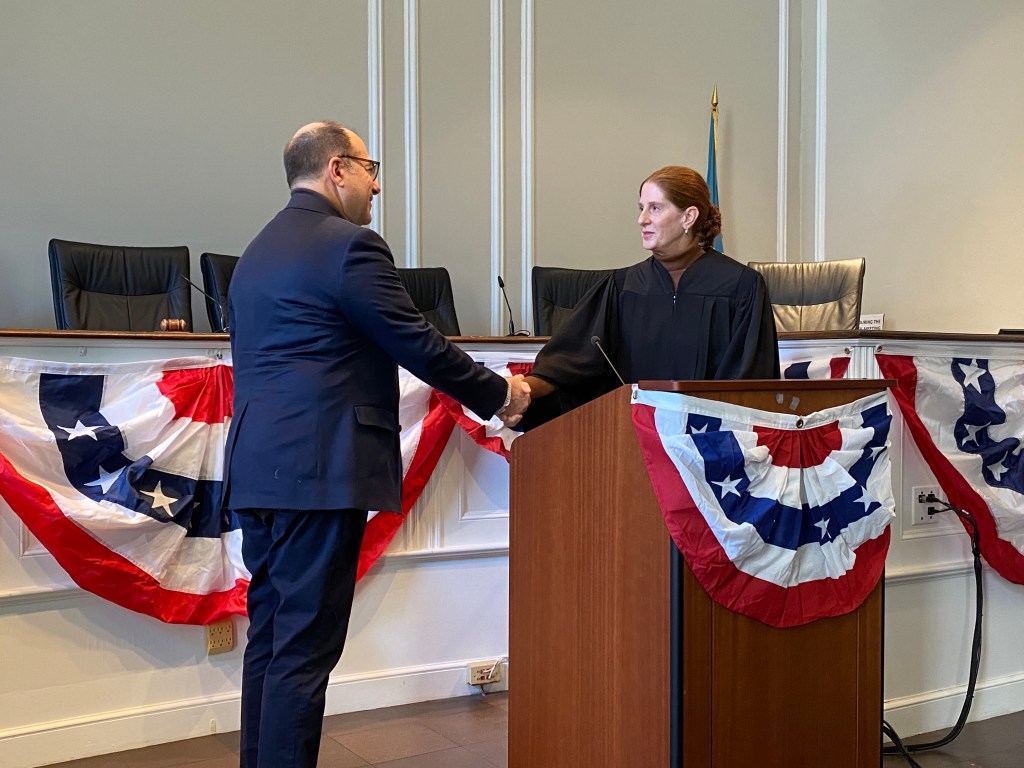
Please summarize your public service experience and contributions.
Nathan:
- Rye City Council Member: 2021 to present (liaison to Boat Basin Commission, Landmarks Advisory Committee, Rye Free Reading Room, Zoning Board of Appeals)
- Rye High School practice interviewer: 2018 and prior
- Rye Youth Council Career GPS panelist: 2018 and prior
- Governor’s Office of Storm Recovery New York Rising Community Reconstruction Program, Planning Committee for City of Rye, appointed: 2012 – 2014
- Rye City School District Board of Education: 2003 – 2012
- Three terms as president,
- Two terms as vice president,
- Chaired the Audit Committee, Collective Bargaining Negotiating Team, Management Team, Policy Committee, Architect Search Committee (for the science wing), and Senior Administrator Search Committee
- Rye Little League: 2010 – 2011, coach
- Rye Youth Soccer: 2010 and prior, coach
Describe your core base of electoral support.
Nathan: Residents of Rye, many of whom are familiar with my volunteer service, who like the optimism and dedication I will bring, and have always brought, to our community. I have been elected to office in Rye 5 times by the general public (3x to the Board of Education, 2x to the City Council) as well as been selected by bipartisan officials to represent Rye residents. While elections can be partisan, service to our community should never be. Every time I’ve been elected or appointed it has been an honor and a responsibility to the whole community; I am deeply committed to what’s best for Rye at large.
Opportunities and Cost Containment
What are the three biggest opportunities / challenges facing the City of Rye over the next 3-5 years?
Nathan:
- Flooding and Environmental Challenges. We regularly face severe weather, leading to flooding, downed trees, and power outages. As a Council we have taken some positive steps, but we must look at all three floodplains and make flood mitigation a constant on our agenda. We need to continue to prioritize and build on the work that has gotten us Bronze status as a Climate Smart Community; working toward Silver status is completely aligned with meeting these challenges.
- Comprehensive planning to meet infrastructure needs and protect quality of life and neighborhoods. I’m optimistic that we can articulate a shared vision and set strategic priorities through comprehensive planning (our 1985 master plan set a vision through 2000, it is out of date by 25 years). Our process will be open and collaborative with active community participation; we have a lot of talent and smarts in Rye. We need to repair roads and sewers, maintain parkland and trees, protect our neighborhoods and ensure a vibrant and beautiful downtown. We need to do so in a manner that supports and enhances the quality of life we enjoy in Rye. This means prioritizing the projects that yield the greatest positive impact.
- Good Governance/Fiscal Discipline. It’s how we can get good things done well. My commitment to transparency and listening to the community at large has been unwavering since I was elected to the City Council and has been demonstrated in my service to Rye since 2003 when I was first elected to the Board of Education. The Council must always be prepared to listen to multiple interest groups and consider multiple points of view when deliberating policy and legislation, new initiatives, and budget. This goes hand in hand with responsibly managing our budget and supporting our City staff in obtaining grants for infrastructure and meaningful initiatives.
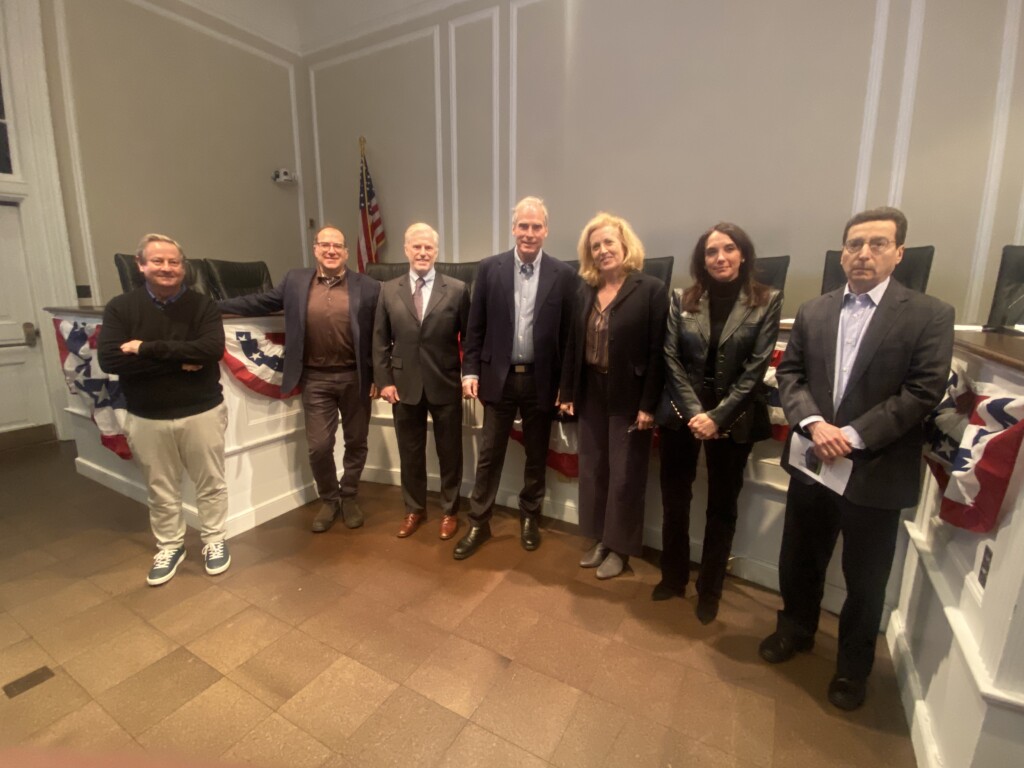
What is new about these opportunities and challenges in the last 12 months?
Nathan:
- Excellent intergovernmental relationships. On a very positive note, my running mates and I have excellent working relationships across the board with our County and State officials and our Congressman; there have been lengthy periods in Rye where that has not been the case. We are so well positioned for collaboration and getting things done.
- Current federal government fiscal policy. The challenge we face in the near term is that the federal government under the Republican-controlled Congress and White House has cut billions in Medicaid, other healthcare, and mental health support to New York State as well as cut many other federally funded programs. The State and the County are left to meet those needs. There is a trickledown effect on municipalities as the State and County will have less money to support municipal projects and may look to municipalities and schools to fill certain service gaps. (Medicaid provides services beyond healthcare for the uninsured and there are people in Rye who receive a range of Medicaid funded services now at serious risk of losing those services.)
- The way forward. Back to positive notes: (i) we have the above excellent intergovernmental relationships and (ii) I have experience leading in this community during very challenging economic times: I led our school district during the financial crisis in 2009-11 when we managed to deliver tax cap complaint budgets before there was a tax cap while offering and enhancing our classroom and athletic programs; we were disciplined in our budget and spending, reallocating resources to meet current needs and maintaining our top bond rating (and school ranking). Rye needs leadership with that kind of experience, and I look forward to bringing it to leading the Council and working with our very capable professional staff and many volunteer boards and commissions who devote themselves to ensuring that Rye is such a wonderful community.
What are the three biggest areas for cost containment with the City of Rye over the next 3-5 years?
Nathan:
- Earlier strategic budget discussions. The formal budget process presents and workshops the budget with the Council to the public all within seven weeks before it is voted on and adopted at year end, it’s too late to do much. The Council (with input from the community and the finance committee) should be having strategic discussions about costs, services, and projected needs in the context of the budget in the first half of the year, before the proposed budget is drafted. This would better support strategic fiscal planning in a manner that is open and transparent with our residents. In addition, we should have periodic finance updates and 3- or 5-year projections that show the impact of any fiscal decision we take today on taxes in the future. This is normal for well run businesses, nonprofits, and public-school districts; it is basic to good fiscal oversight.
- Operating efficiencies. The City’s professional staff have already stepped this up through a variety of initiatives to realize significant cost savings across multiple departments. We need to support this work.
- Shared resources and grants. Shared resources, shared services, and partnerships with other entities in obtaining grants. We need to keep in mind that the Rye City taxpayer funds our City, our schools, our county, and multiple nonprofit organizations. When we allocate our resources, we should be doing so in a manner that offers the biggest the bang for the buck, avoids overlapping spends, and leverages our taxpayers’ funds in coordination with the County, the two school districts, and the many nonprofits.
- Litigation Spending. We need to seriously consider the number of non-routine litigations the City is involved in. Litigation can be critical to protecting our interests, often we are left with no choice, but we need to take a hard look at whether some of these lawsuits could have been avoided and what other ways to address major disagreements might serve us better.
- Open Discourse. In our operations and when planning infrastructure, environmental, and other capital improvements, planning the financing goes hand in hand with prioritizing. This requires constant open discourse for the community to see and participate in. See item one above.
City Management
Describe how you see the role of Rye’s city manager and her or his relationship with the city council. Pick a. or b. and add any further explanation on the roles and responsibilities of the mayor, council members, city manager and how they interact.
Pick one:
- The city manager form of government: the council acts as a legislative body, responsible for setting policies, passing laws, and approving the budget. One member of the council often serves as mayor and the mayor’s role is usually ceremonial or limited in executive power. The city manager serves as the chief executive officer of the city.
- The mayor-council form of government: power is divided between an elected mayor and an elected city council. The mayor serves as the chief executive officer of the city.
Nathan: Option “a” is closest to the mark, though not fully correct; option “b” describes government for large cities. The roles of the Council, the Mayor, and the City Manager are set forth in Articles 6, 7, and 8 of the Rye City Charter. Rye has what is well described as a “council-manager” form of government. The Council is legislative, provides oversight, passes the budget, and sets policy and strategic direction. The Mayor is part of the Council, has one vote and in most instances functions like a board chairperson. The Mayor does have some executive authority delineated in Article 7. The City Manager is, per the Charter, the chief administrative officer of the City (not the chief executive officer, no one has that title or descriptor) and is responsible for running City operations and implementing the direction of the Council. Governance is a human and social endeavor; it is not mechanical, and leadership, particularly mayoral, is earned daily. Respective of roles, Rye City government should work as a really good and collaborative partnership between its elected officials and professional staff; just as effective nonprofit organizations work. It’s this spirit that enables nonprofit entities to get big initiatives done with tight resources and a combination of volunteer board members and paid professional staff. That is emblematic of my leadership on the board of education; I’m committed to ensuring that spirit for Rye City government too.
The City of Rye has been without a permanent city manager since the end of March. Indicate yes or no on the following statements.
Nathan:
| Issue | Yes or No |
| The city is generally good at succession planning. | The City is very fortunate to have excellent staff across all departments and at all levels ensuring that our community is well served whenever any position is in transition. As a Councilmember involved in the current City manager search, saying “yes” or “no” to this question could inadvertently betray the confidentiality of the search process. |
| The current city manager search has taken too long. | No. The process that is underway is thoughtful, diligent and in the best interest of Rye. The timing of each step is subject to multiple factors, many that we don’t control. We owe it to the Rye community and our City staff to complete the process to the best of our collective ability. |
| A new permanent city manager should be in place by or before the fall election. | No. It would be nice, but the timing shouldn’t be driven by the political calendar one way or another. What makes for a good choice for Rye before the election should also make for a good choice for Rye after. Let’s not conflate the election and the search. |

(PHOTO: Rye County Legislator Catherine Parker, (then) incoming Councilmember Jamie Jensen and Councilmember Josh Nathan at the home of local Dem boss Danielle Tagger-Epstein on Tuesday, November 7, 2023.)Comprehensive Planning and Land Use
The city is finally taking steps to update its comprehensive (fka master) plan that dates back to 1985 and is in the process of selecting an external consultant to help develop the plan. How would you explain what this process is and why it is important to a fifth grader?
Nathan: (Rye 5th graders are a pretty sophisticated group.)
- Comprehensive planning is an opportunity to create a guide for Rye’s future to best meet the needs of the people who live here now and people who will be living here during the next 20 or 30 years. People in Rye today have some different needs than the people who were here in 1985, the last time Rye did a plan.
- Our goals are to: (i) protect all that we love about Rye, like our parks, downtown, beautiful neighborhoods, shoreline, etc., (ii) improve what needs work, such as recreational facilities like Gagliardo Park, and (iii) plan for a range of changes that are happening, such as more electric cars, greater demand on our recreation facilities, climate change like flooding and heat, and population change like what today’s young families need and what people living longer and wanting to stay active in the Rye need.
- The process will have us come together as a community and collect people’s ideas and concerns and, working with our consultant, develop a shared vision for Rye’s future that helps us make important choices, like in updating our zoning code which tells us what we can build and how it can be built.
- We will be getting participation from all facets of Rye’s community, residents from throughout our neighborhoods, our schools, our nonprofit organizations, our churches and synagogue, the businesses that are here, developers who work a lot in Rye, our professional staff, different user groups of our parks and recreation programs and the many people who have volunteered in Rye over many years.
- Once we get started the process should take 18-24 months. That doesn’t mean we need to wait for it to be finished, we can develop aspects of the plan along the way. When we have a shared vision, we can make good decisions, including about zoning, infrastructure priorities, ways to improve traffic and parking, flood mitigation, recreation facilities, neighborhood preservation, and climate smart initiatives.
- Comprehensive planning will help us protect and improve what we love about for years to come.
Land use and the control of development has been raised as an issue in Rye, fueled by a variety of concerns including flood control, rock chipping and the development of flag lots. Should more be done to bring transparency and control to land use decisions in Rye? If so, what are three of the top recommendations you would make?
Nathan: Yes, fuller community engagement is essential and will lead to better decision making and clarity about what we want to accomplish and how. Three recommendations:
- Use comprehensive planning to address concerns and open up our process. A lot of the discussion on these matters is siloed, the heavy lifting is spread among committees working in good faith and citizen feedback is often taken in the limited context of a particular project.
- Evaluate the impact of land use laws we passed in the last 4 years (BAR review, flag lots, steep slopes, rock chipping tree management) and see whether they are accomplishing their respective purposes and whether there are any unintended consequences.
- Review our code with attention to key concerns, including flooding, sustainability, density, and aesthetics, and whether Rye’s code is supporting or inhibiting the kind of improvements, redevelopment, and land use that Rye wants. Additionally, reviewing our processes to ensure they are serving our needs, folks are sometimes very surprised by outcomes, not realizing how different types of approvals work.
What benchmarks and data could the City publish on a routine, ongoing basis that could help residents understand the state of land use in the City?
Nathan: Through comprehensive planning, we will identify specific data sets that we can publish and track. Examples include: (i) a clear picture of our demographics, (ii) the numbers of different types of permits requested, (iii) the numbers of variances applied for and granted/denied and why, (iv) the number of homes at max FAR, (v) the number of sustainability installations including geothermal installations, (vi) the number of EVs and home charging stations, (vii) data from our recent Code changes concerning trees, flag lots, steep slopes, rock chipping, the BAR’s increased authority, and (viii) associated quality of life data, including how permitted property use is or isn’t able to meet resident’s needs. Seeing this kind data will be useful in showing trends and inform planning and decision making.
Larger Development Plans
What are your current views on the development plan for the former United Hospital site just over the Rye City line in Port Chester? And what should the City be doing to represent its interests?
Nathan: At the moment, the core concern is impact on traffic and safety in the nearby Rye neighborhoods. We also need to consider the impact on our downtown business district, parking, and train station. In addition, the project and its impact need to be considered in the context of Rye Country Day School’s development of the Thruway property.
What we must be doing:
- Meet with residents in the nearby neighborhoods to listen to current concerns and share information as the project keeps evolving.
- Have open communications with Port Chester to protect Rye’s interests. We have been engaged in litigation with Port Chester over the site’s development, which impacts having a more cooperative relationship concerning this matter.
- Communicate with County officials and make sure we have a seat at the table when it comes to any services the County might provide, such as bus service, and be sure it works for Rye or doesn’t negatively impact Rye.
What are your current views on the development plan for the Rye Art Center on Milton Road? And what should the City be doing to represent its interests?
Nathan: We should be able to support zoning that enables Rye Art Center to better fulfill its mission while protecting neighborhood interests. That means working collaboratively with the Art Center and its neighbors to ensure that the plans for a more robust facility work well with the character of the Milton Road neighborhood. This includes looking at: (i) parking and traffic, (ii) how the design contributes to the aesthetics of the Milton Road corridor of beautiful homes, school campuses, the churches, and fireman’s circle, and (iii) the impact of any changes to the activities that will be taking place at the Art Center. In doing this, we should be looking at the Art Center campus (of which the City owns and rents back one parcel) and how it works with the adjacent Rye Recreation property; a broader view may well aid in solving any concerns about traffic and parking, programmatic needs, and aesthetics. This should be a great opportunity to ensure that the arts continue to have a great home in Rye.
What are your current views on the plan to redevelop The Osborn retirement community on the Boston Post Road? And what should the City be doing to represent its interests?
Nathan: The Osborn has submitted to the City’s Planning Commission designs that appear responsive to the desire to preserving an open space feel for the adjacent residential neighborhoods while meeting its needs to have more capacity for senior living, something we as a broader community should embrace. The refrain during the zoning text amendment hearings (which were tense and led to litigation) was that the concerned members of the community should trust the planning process, where they will get a chance to comment on specifics. To honor that refrain, the Commission’s hearings should be recorded and accessible online so that the process is as open and transparent as possible for the community to see what’s being considered and to submit comments. We have a very professional Planning Commission, people will have a chance to see how it looks out for Rye’s interests, which should create confidence in the final project.
What are your current views on the plan to develop the Thruway property along the Boston Post Road purchased by Rye Country Day School? And what should the City be doing to represent its interests?
Nathan: The addition of capacity by using what has been a dead space between highways is very promising; both for Rye Country Day School and for the Rye community given the School’s commitment to making space available for local community athletics. In seeing this through to a win for all, it’s paramount that (i) we address neighborhood impact, specifically with regard to traffic, preserving safety and quality of life, (ii) review the project in the context of the development of the adjacent former United Hospital site, and (iii) that we work out a fair arrangement for the public’s use of that space. The City’s recreation department will be an important stakeholder. As Mayor, my job will be to actively foster communication and transparency throughout our process so that we are sure our community is able to make the most of this opportunity in keeping with the investment of RCDS and the needs of the neighborhood and its residents.
In addition to the current Nursery Field turf project, should Rye have more turf athletic fields, yes or no?
Nathan: Athletics are central in our community, both for our youth and adult residents. I’m in favor of having the facilities to meet our residents’ needs, including fields for soccer and lacrosse, softball and baseball, courts for tennis, pickle ball, and basketball, etc. In 2024, we passed a Council resolution calling for an analysis of all of our playing fields and a recreation facilities plan. That work is underway, and we have had an initial report (in the context of Gagliardo park, which is in dire need of renovation). The report had concepts, based on field usage, for maximizing some of our recreation space. We should see that work through and then make decisions on how to proceed. What these fields should be made of is site and use specific; health and safety, durability, maintenance, environmental, and cost factors vary by location and recreational activity. In addition, turf technology and regulations continue to change. NYS has added regulations concerning synthetic turf and currently there are bills in both the Assembly and Senate that could outlaw its installation and replacement. The best solution for a given site, whether synthetic, hybrid, or natural, will depend on appropriate solutions available at the time. Let’s complete our field and recreation analysis and then decide what to do.
Flooding
What are the three flood mitigation measures the City should undertake with the greatest cost/benefit?
Nathan:
- Storm Water and Sewage. Continue our improvement work on the City’s storm water and sewage system. This is something our Department of Public Works has been doing, and we must continue to support it. It yields tangible positive results.
- Address opportunities we have in Rye. Continue to work with our engineering consultants on what can be done in Rye that isn’t contingent on the agreement of other communities. The Report by the Governor’s Office of Storm Recovery NYRCR Planning Committee for Rye identified over a dozen flood mitigation/storm response projects that are within Rye City or are controlled by Rye City. The work on the sluice gate must continue. The upstream mitigation efforts should continue notwithstanding contingencies we don’t control. Our engineers, who were involved in the NYRCR report, have provided a limited update of that analysis as it pertains to the Blind Brook floodplain. The analysis should also be updated with respect to the other two flood plains, Beaver Brook Swamp and Midland Avenue. We need to actively prioritize our projects and coordinate with residents and other stakeholders, e.g., the Nature Center, the Rye Y, and the Library.
- Comprehensive Planning. We need to engage in comprehensive planning (our 1985 Master Plan expired in 2000 according to its time horizon) with great attention to flood mitigation and storm resiliency. While there is no single solution, there are many coordinated actions that can improve our situation with respect to flood and storm water (as well as power outages, heat, wind, and other issues).
What are some of the ways the City can realistically expect to pay for some of the more expensive flood mitigation projects (including infrastructure)?
Nathan:
- State and federal grants. We have been successful in working with State and Federal officials to obtain grants for flood mitigation and storm resiliency, e.g., the $3 million NYRCR grant to Rye among others. We must continue that work. It’s a constantly changing landscape and we have excellent staff and relationships with elected officials to help us stay on top of it.
- The County. We should continue to work directly with the County; the prior City Manager and I worked with County Legislator Catherine Parker to secure $250,000 in grant funds from the County in 2023 and most recently the County announced $20 million to replace the Playland Parkway bridge and the Oakland Beach Avenue bridge.
- Collaborate with neighboring communities. We need to work closely with our neighboring communities. The County actively facilitates projects that run across municipalities.
What are a few of the most effective but least expensive measures the City can take in regards to flood mitigation?
Nathan:
- Comprehensive planning. This is an opportunity to make flood mitigation and storm resilience a strategic priority in a forward-looking manner. It’s a low cost spend because (i) we are doing it anyway, (ii) we’ve already set aside the funds, and (iii) there are state grant funds to assist with it. In recent years, other Westchester communities have used comprehensive planning as a critical tool to find and support a myriad of solutions to their flood mitigation needs. Rye is overdue for this kind of overall strategic thinking. I can’t wait for us to get started on it.
- Code review. A review of our building code with a lens on updating it across the board with best practices for storm resiliency and flood mitigation is a very low-cost measure. This should be a part of comprehensive planning.
- Collaboration with neighboring communities on policy and development issues. The formal cooperation with Mamaroneck and work with the Harrison community concerning the Grant Avenue Project adjacent to Beaver Brook Swamp is a good example of how critical this is. That project threatened Rye, Harrison, and Mamaroneck neighborhoods. Working together, elected officials, staff, and community members were able to fend off the threat. I believe Rye’s out of pocket was well under ten thousand dollars.
- Work with the County and utilities. We should partner with the County in working with the utility companies on storm resiliency and flood mitigation measures. The utilities spend a lot of our money on infrastructure, let’s make sure it’s being spent smartly for Rye. There should be no cost beyond some staff time, which already gets drawn into addressing these projects.
- Capital Improvement Plan. We should be looking at storm resiliency and flood mitigation measures as part of every infrastructure project and use that as a factor in prioritizing these projects. This is money we are already planning on spending. Highlighting storm resiliency and flood mitigation (like sustainability) can assist with grant eligibility.
Deer Management
The City is assembling its first deer management committee, realizing that the massive overpopulation of deer has decimated our parks, our native plants and gardens and has been one of the factors contributing to the spread of invasive species.
Yes or no:
Nathan:
| Issue | Yes or no |
| We have a serious deer overpopulation problem | We need to find out beyond perception. That is why I supported forming the deer management committee to do the NYS required analysis of the problems residents encounter, the relative size of our deer population, the level and nature of damage caused, and recommend an appropriate management program. The degree and seriousness of our deer situation is best classified through that work. |
| I support a scientifically informed deer management process, including an ongoing culling program if recommended by experts | Yes. The key is for the Council to follow the science and the law. Culling is one of a number of options that may be appropriate. I have no predetermined objection to (or enthusiasm for) any scientifically sound option. Cost is a key factor in evaluating any deer management program. Culling comes with an ongoing cost as you need to do it annually. It is something residents should be heard on. |
| If indicated, I would support a culling program utilizing trained and licensed sharp shooters if recommended by experts | Yes, if that’s what is called for and if that’s the safest method and it is fiscally prudent. The County is open to working with Rye on deer management once the City completes the analysis and obtains the permission required by state law. That may be very helpful in addressing Rye’s needs once we see the committee’s work. |
City code allows for a maximum fence height of six (6) feet on most private property – this is ineffective at deterring deer.
Proper deer fencing in a high deer pressure area should be eight feet (8) feet or higher. Would you support a change in City code that raises the max fence height to eight (8) feet or higher where six feet is currently indicated so residents can protect their private property from deer browse?
Yes or no?
Nathan: Yes, if the findings are that increasing fence size will be materially helpful. I would of course ask our land use professionals what other factors we should consider before adjusting the allowable fence height; are there any downsides? Note, fence height, like culling, is one possible element of a deer management plan. Let’s see what the committee recommends based on science and expert input and what it all costs. I support a deer management program that is responsive to the needs of Rye’s residents, is driven by science, and is fiscally responsible.
Lightning Round
Please Answer the following questions Yes or No:
Nathan:
| Issue | Yes or No | One sentence explanation. |
| Rye is prepared for the next “100 year” flood. | No | Progress is being made but there is a tremendous amount to do; in addition to our work on upstream projects outside of Rye that impact Indian Village, the downtown, and the Blind Brook neighborhoods, we also need to prioritize the other two big floodplains: Beaver Swamp Brook, and Midland Avenue; and we need to focus on what we can do within Rye; the risks to life and property from weather and power outages are unacceptable. This needs to be a continuing priority. |
| Rye should update its Comprehensive / Master Plan. | Yes | Rye’s masterplan is from 1985 and expired in 2000 according to its time horizon; our population has changed, our environment has changed, the demands on our resources have changed; the current plan is not serving us; comprehensive planning which we are about to start, will support good decision making that serves the community at large, is responsive to quality-of-life issues, and is fiscally responsible. |
| Rye should have additional restrictions on residential development. | Yes, as part of a plan | We need to avoid Rye becoming too dense with development, but we don’t want to prevent reasonable home improvement or meeting the needs of our current residents; to this end we need to: (1) commit to comprehensive planning, (2) look at the impact of the restriction put in place over the last 4 years and evaluate if they are achieving the results the community hoped for and whether they are having any unintended consequences, and (3) look at what works and what doesn’t in our code; we need more public engagement on this. |
| Rye should have additional restrictions on commercial development. | Yes | Rye is in a period of redevelopment; we want to encourage projects that meet community needs and contribute to our vibrant commercial areas; comprehensive planning is critical to doing so in a sensible manner. |
| Rye should take steps to preserve the character of its downtown / central business district. | Yes | The Central Business District report is an excellent step, I support the recommended 35ft height restriction on buildings and the engagement of a design professional to establish architectural parameters. |
| The City does a good job supporting its local merchants. | Yes | Of course it’s in the eye of the beholder: it must be an ongoing effort to make sure we are partnering to insure a good and successful downtown experience; the holiday illuminations are a good example. |
| Rye should be more pedestrian and bike friendly. | Yes | People enjoy our walking, running, and biking areas daily; the sidewalk installation on Forest Avenue will be a further improvement; this should continue to be a priority in our planning. |
| I voted for (or would have voted for) the City’s tree law. | Yes | I voted for the law, though I committed, as I believe did the full Council, to revisit it in 14 months to see how it’s working and whether it needs modification. I would have preferred a law focusing on perimeter trees, but let’s honor our commitment to review how the law is working. |
| Rye should either find a way to enforce the leaf blower law or eliminate it. | Yes, and | The noise is a scourge on peaceful enjoyment of our homes. And, it’s time for a new law as technology now provides good alternative to gas-powered blowers, the City and many landscapers are using electric blowers. |
| Rye should aim to completely ban gas leaf blowers within 2-3 years. | Yes | Or sooner; the noise is awful and electric blowers now can do the job; it’s matter of what transition time is best for Rye residents. |
| Landscapers should be registered with Rye so practices such as leaf blowers can be more closely controlled. | No | The City Council considered this and determined that such would be overly burdensome on residents, City staff, and landscapers and would not meaningfully aid in reducing violations of the ordinance. |
| I voted for (or would have voted for) in favor of the artificial turf installation at Nursery Field. | Yes | The vote was unanimous to accept the gift after the City did a proper flood analysis; engaged in diligence and open discourse with the community, including about natural grass, and committed to enhancing the parkland around the field to meet neighborhood needs and concerns. |
| Sustainable Westchester’s Westchester Power program should be the default electricity provider for residents. | Yes | I support residents having a choice and because as a matter of state law that’s the only way we can have WP as an option: if you want choice the law says WP must be the default with an optout feature, if you want Con Ed to be the default, you aren’t allowed to even offer WP as a choice. |
| Rye Playland will be in good hands with Westchester County. | Yes | For nearly 100 years the County managed the park, a greatly enjoyed and beautiful public asset, the prior private manager was not a good neighbor, the County has already shown it will be. |
| The Pride flag should be raised each year on City flagpoles. | Yes | Rye’s LGBTQ+ community should feel the same sense of home and belonging so many here enjoy, particularly given the adversity they encounter beyond Rye. We support inclusiveness in our schools, we should do so in our community at large. |
| The current road conditions in Rye are acceptable. | We are moving toward that | Rye has implemented a sound and fiscally responsible paving plan that has been bringing our roads into better condition overall despite the disruption by utilities. Improving road conditions needs to remain a priority. Our parking lots need attention. |
| Rye needs to reduce its deer population by active management that might include sharp shooters. | Maybe | We have just commenced an assessment of the situation with the formation of the Deer Committee. Completion of that assessment and consideration of available best practices is legally required before we can decide if active management is appropriate and if so, how that would be carried out. |
| Rye should have its own designated, year-round off-leash dog park (similar to what Port Chester has). | Yes | It’s a question of where such a park would be, as we have limited recreational space to augment the off-leash morning hours in Rye Town Park and off-season hours at Playland Beach. |

Tell us about you:
How would your friends and family describe you in one word?
Nathan: Kind.
What is the kindest thing someone has ever done for you?
Nathan: Many have been kind to me when it mattered most. This is one instance: Thirty years ago, a federal judge ordered a one-month hiatus in a tense multi-party complex commercial litigation so I could take a trip with my girlfriend and get engaged to my now wife. My colleague, without telling me, asked the judge, all the lawyers on the case enthusiastically agreed, and the judge encouraged everyone to spend the time with loved ones.
What is your day job?
Nathan: I am an attorney. My law practice provides counsel and representation to clients in small businesses, media and entertainment, arts and education, and the nonprofit sector. I serve as outside general counsel to select nonprofit organizations. Previously I served as general counsel to WNET New York Public Media, broadcasting here on channels 13 and 21 (I also worked there as an executive producer). My professional volunteer work includes:
- New York State Bar Association, Bylaws Committee
- Serving on the advisory board of the Society of American Graphic Artists
If you could travel anywhere in the world, where would you go and why, and who would you take with you?
Nathan: Australia with family. We haven’t been. We have cousins and friends there.
What is your current favorite streaming / TV series?
Nathan: Outrageous (historical drama on BritBox), Stick (comedy on Apple TV).
What is your favorite movie?
Nathan: Hard to pick. Three that top the list: It’s a Wonderful Life, To Kill a Mockingbird, Dr. Strangelove.
Where do you live in Rye and how many years have you lived in the City?
Nathan: Hillside Place (Rye Beach area). My family and I have lived in Rye for 25 years.
What affiliations do you have with organizations in Rye?
Nathan:
- Rye City Council Member – December 2021 to present; liaison to Boat Basin Commission, Landmarks Advisory Committee, Rye Free Reading Room, Zoning Board of Appeals
- NAACP Port Chester/Rye Chapter – member since 2022
- Rye City Democratic Committee, District Leader since 2022
- Rye Lions Club – member since 2021
- American Yacht Club – member since 2009
What are three of your favorite food takeout / delivery restaurants in or around Rye?
Nathan:
- Piazza Pizza – if my wife and I live to 100, they should get credit.
- What we favor is the variety and high quality of takeout/delivery now available via mobile apps from Rye’s terrific restaurants, they meet any given mood and quite a range of cravings.
What do you enjoy doing in your free time?
Nathan: Getting together with family and friends, sailing, skiing, and visiting art museums and galleries. I spend a lot of time in Rye walking and meeting with residents. I very much enjoy listening to community members and being of service as a volunteer. I enjoy it as a Councilmember, and I enjoyed it as a school board member and in my other volunteer service for Rye.
Thanks, Josh!
See more information: