

RyeGPT People of Note is a series highlighting individuals who have a connection to the City of Rye. In the series we ask OpenAI’s ChatGPT to prepare a biography and explain the individual’s connection to Rye.
We welcome your feedback on this series – the use of artificial intelligence, the accuracy and usefulness of each article and your assistance in understanding other pertinent insights related to the person’s connection to Rye.
You can add comments at the bottom of each article or you can send feedback via Tips & Letters.
Roland T. Bird (1899–1978) was an American fossil hunter and amateur paleontologist best known for discovering and preserving some of the most important dinosaur trackways ever found in North America. Though largely self-taught, Bird made pioneering contributions to the field of paleontology during his career with the American Museum of Natural History (AMNH). He also spent a portion of his life in Rye, New York, where his family, including his brother and archaeologist Junius Bird, resided for several years.
Early Life and Career
Roland Thaxter Bird was born on December 29, 1899, in Rye, New York. The son of an amateur entomologist and an inquisitive naturalist by inclination, Bird developed an early interest in nature and fossils. Despite struggling with chronic illness during childhood and dropping out of school after eighth grade, Bird pursued his passion for fossil hunting with determination and an adventurer’s spirit.
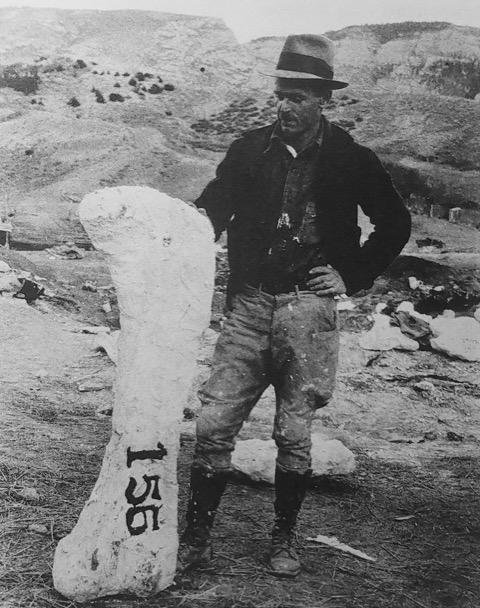
In the 1930s, Bird caught the attention of Henry Fairfield Osborn and Barnum Brown at the American Museum of Natural History. He was eventually hired as a fossil collector for the museum—one of the few people to rise to such a role without formal scientific training. His skill in the field, dogged curiosity, and ability to spot fossils where others overlooked them earned him lasting respect.

Discoveries and Legacy
Bird is most famous for discovering a massive set of fossilized dinosaur tracks in the riverbed of the Paluxy River near Glen Rose, Texas, in 1938. These tracks, preserved in Cretaceous limestone, included distinct sauropod and theropod footprints—among the most well-preserved in the world. Bird was instrumental in documenting and excavating these trackways, sections of which were shipped back to New York and installed in the Hall of Dinosaurs at the American Museum of Natural History.
His fieldwork also took him across the American Southwest, from New Mexico to Utah, where he unearthed fossils of Allosaurus and other prehistoric creatures. His 1939 Natural History magazine article “Thunder in His Footsteps” helped popularize the significance of dinosaur footprints to a broader public audience.
Connection to Rye, New York
Although much of Bird’s adult life was spent on fossil expeditions in remote areas, his formative years were rooted in Rye where he lived during his youth. Census and family records indicate the Bird family resided in Rye in the early 20th century.
In personal accounts including his 1939 article “Thunder in His Footsteps” and AMNH archives, he often reflected on his childhood fascination with “strange rocks” and the sense of wonder he developed exploring the natural world around his home in Rye.
Later Life and Death
Roland T. Bird continued working with the American Museum of Natural History into the 1950s. Though never formally trained as a scientist, he became an irreplaceable fieldworker and amateur scholar in the museum’s Department of Vertebrate Paleontology. He passed away in 1978, having left behind a legacy not just of fossils, but of curiosity-driven science.
Today, Bird is remembered for democratizing fossil hunting—showing that passion and persistence could unearth discoveries as monumental as any made in the ivory towers of academia. His work still educates and inspires visitors at the AMNH and beyond.