

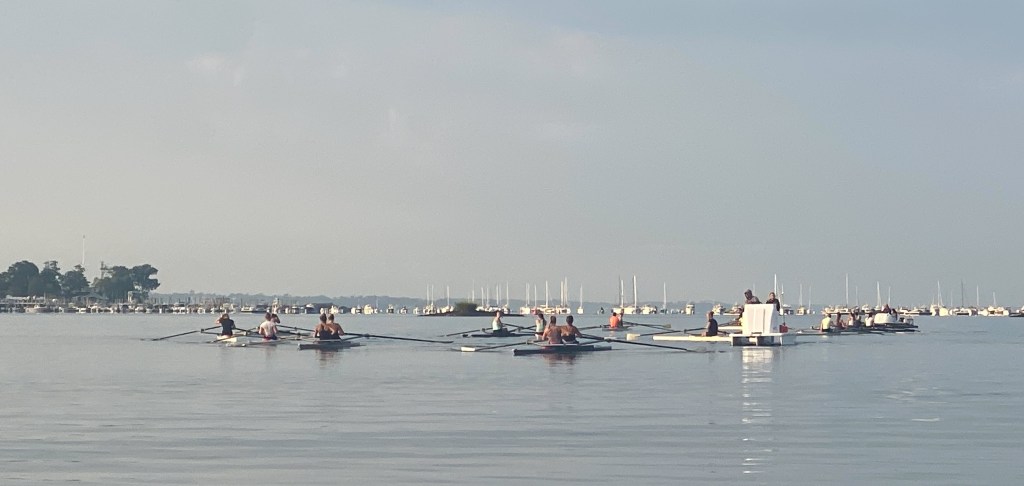
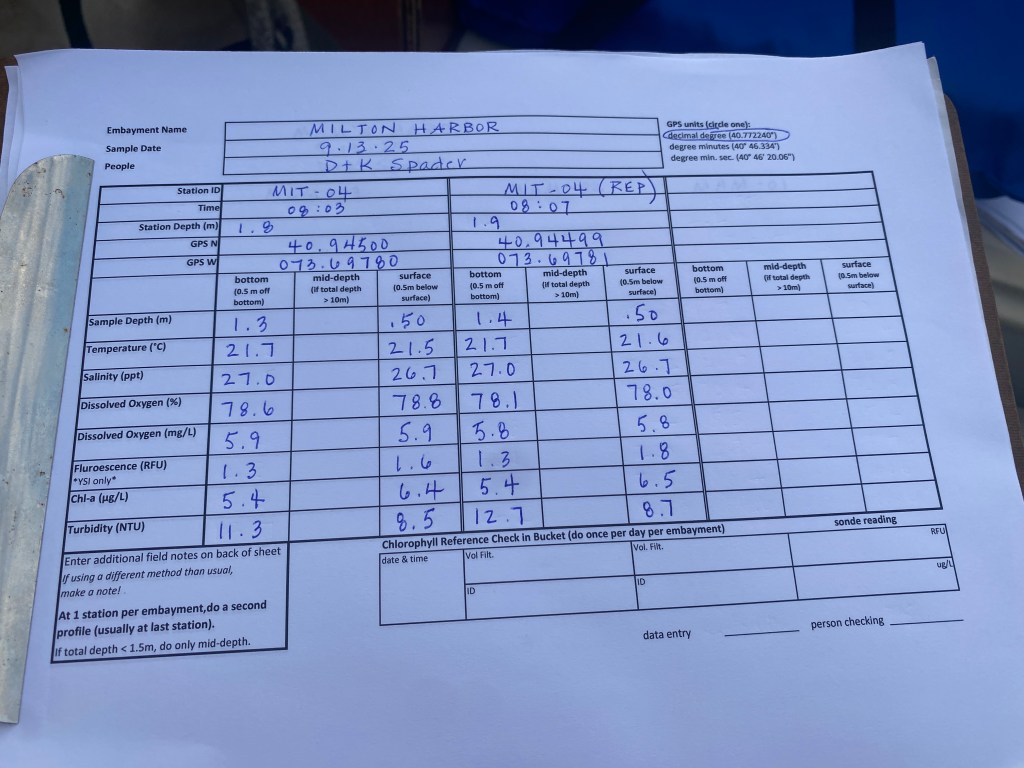
Milton Harbor, home to the Rye Boat Basin, Row America Rye, Wainwright House, Marshlands Conservancy, Hen Island, Shenrock Shore and American Yacht clubs, and a myriad of private homes, received a D+ in the latest Long Island Sound report card issued by Save the Sound. The biennial water quality grades reflect ecological health based on data collected during the most recent full monitoring season in 2025.
“So Milton Harbor received a D+,” said Peter Linderoth, director of healthy waters and lands for Save the Sound, describing the harbor’s composite score. “Where it had some issues… It has a C for chlorophyll, a D for macrophytes, which are seaweeds, and then it got an F for water clarity.”
The [low score] it’s driven by excess nitrogen entering Milton Harbor,” continued Linderoth.
This is the first year Milton Harper has been included in the Save the Sound report card. Linderoth cautioned it’s best to look at trends over a number of years but said if what we see this year continues, nitrogen reduction will bring about higher grades for chlorophyll a and for macrophytes.
Likely Causes: Your Lawn
The Blind Brook, which starts at Westchester County Airport and travels for nine miles before it empties into Milton Harbor, is carrying nonpoint source pollution into the Sound. Westchester County has some of the highest fertilizer application rates in the Long Island Sound watershed and across New York State. Excessive fertilizer applications are not good for the environment, said Save the Sound’s Linderoth.
“We’re looking at non-native grasses that are being fertilized to live in an inhospitable climate where they wouldn’t survive without the water and the fertilizer,” said Linderoth. “So cutting back on turf grass and planting native.”
Another Culprit: Impervious Surfaces
Impervious surfaces, such as roofs, roads, and parking lots, allow for rapid runoff of stormwater into the Blind Brook or other tributaries. Without being naturally filtered in the ground, they enter the water systems fast and bring pollution.
“Reducing the impervious coverage of the Blind Brook watershed can help the Milton Harbor grade,” continued Linderoth. “And then you know sanitary sewer infrastructure. If there’s any septic tanks along Blind Brook, especially as you get up, you know further up the brook, you know making sure that our private sanitary sewer lines are operating properly and not cracked and degraded and oozing sewage into the groundwater.”
What’s It Look Like Nearby and in Open Water?
Milton Harbor received a D+, Mamaroneck Harbor received a C+, and Larchmont Harbor received a C. The area Rye sits in on the Long Island Sound is known as the Eastern Narrows and it received a B on the Save the Sound report card. Only 56% of the 62 bay segments graded in the 2026 Long Island Sound Report Card earned an A or B for overall water quality. Half received a C, D, or F for dissolved oxygen, the leading challenge to water quality in bays and harbors. Low levels of dissolved oxygen impact marine life, reducing growth and reproduction and, when severely reduced, can lead to death.
When you head west and the Sound restricts as it begins to morph into the East River and into New York Harbor, that area is called the Western Narrows. Given that the area is more constricted and it’s harder for areas to see flushing of the water, it received a D on the report card.
The larger more open areas of the Sound as you head up the Connecticut coast and towards the Atlantic received A grades. Save the Sound credited decades of regional efforts, including billions of dollars of upgrades to Connecticut and New York wastewater treatment plants to reduce the levels of nitrogen entering Long Island Sound, as a leading factor in improved open water grades.
Read the full Save the Sound 2026 Long Island Sound Report Card.
