

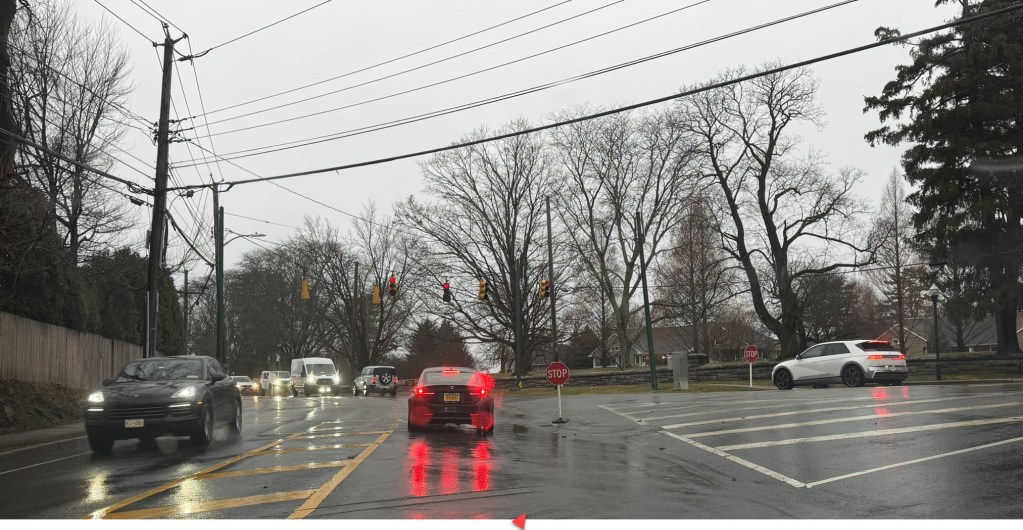
You’ve heard of the slow food movement. How about slow driving?
Anyone traveling up and down the Boston Post Road in the last number of days has seen the flashing red traffic signals and temporary stop signs at the intersection of Old Post Road and Boston Post Road by the campus of The Osborn. Old wiring that needed to be replaced in the signal caused the City to put up the temporary stop signs. Combine this with the traffic signal company that is backed up and delayed in the repair work, and now some residents seem to like the change.
“We have observed the [stop] signs to be working well and have received positive feedback from residents,” City Manager Brian Shea told MyRye.com. “We are considering this a trial period in advance of a potential change.”
Anyone who has lived here twenty years or more will remember when the Boston Post Road had two lanes of traffic in each direction. Whenever you were driving, almost inevitably there was a minivan or large Suburban within inches of your vehicle. That all changed in 2008 when Rye instituted the Boston Post Road “diet” that narrowed the Boston Post Road into one lane each way, creating more room for pedestrians and cyclists and slowing down traffic. More recently, the city removed traffic lights in downtown Purchase Street, installing stop signs and making all of downtown more pedestrian friendly. It also saved money on the cost of replacing the traffic lights.
What do you think? Leave a comment below.

Credit is due to the city manager for advancing a thoughtful, proactive approach to improving Rye’s streets.
The temporary stop-sign trial along Boston Post Road is a smart reminder that Rye doesn’t need years of lengthy, costly studies to begin improving streets. With simple, reversible tools (cones, temporary lane markings, and flexible barriers) municipalities can test ideas in real time, gather immediate feedback, and adapt quickly to what residents actually experience. It’s faster, more cost-effective, and far more responsive.
Just as important, these pilots shift the conversation. Streets aren’t only about moving cars; they’re shared spaces that need to work for everyone, including people who walk, bike, use newer forms of mobility, choose not to drive, or are too young to have a driver’s license. This is a strong first step, but it also highlights the work ahead. In particular, the risks associated with elementary-aged pedestrians crossing Boston Post Road to reach Osborn School remain a significant safety concern.
As we develop the new comprehensive plan, maybe it’s time to move beyond “traffic committees” and start thinking in terms of mobility and transportation—focused on how our streets serve everyone, not just how vehicles move through them.
Rye Community Planning Collaborative