

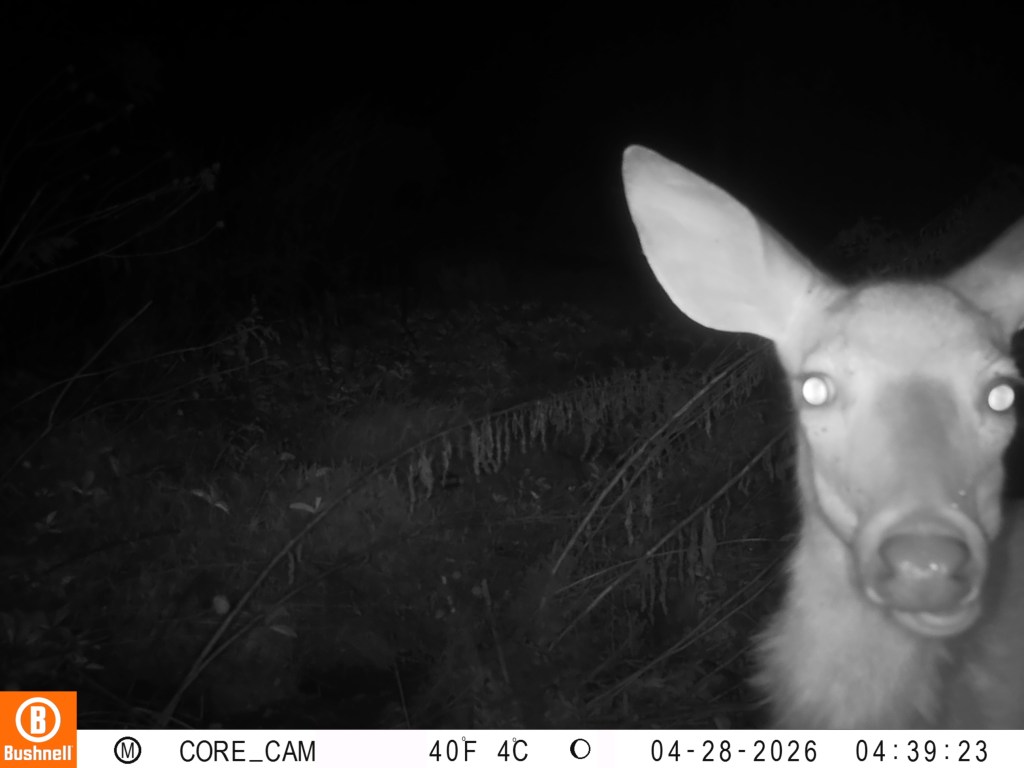
The density of white-tailed deer across the City of Rye is simply off the charts according to an aerial survey commissioned by the City and completed last month by drone. Published scientific research from the U.S. Forest Service indicates negative impacts on forest vegetation when deer density is more than 20 animals per square mile. The research commissioned by the city indicates a density of deer of more than 200 animals – ten times the threshold amount where you start to see ecological damage.
The drone survey, completed by the City’s chosen vendor Versa Drone, was completed over two days on April 18th and 19th when the leaves were still off the trees in order for the drone to use a combination of heat signatures and photography to identify the animals. The survey saw 191 deer across the surveyed area, which equates to approximately 256 deer per square mile.
“That’s a lot of goddamn deer,” said Deer Management Committee chair Ryan Fitzpatrick.
By comparison the Irvington Woods, one of the largest forested areas in southern Westchester south of I-287, saw a deer density of 141 deer per square mile before they developed their own control measures for white-tailed deer.
What’s Next? More Science.
The City has already hired forest ecologist Dr. Danielle Begley-Miller of Forest Management Solutions in Suffern to conduct a forest health assessment. Begley-Miller has already started her research, which will be running through the end of the summer, and she is expected to return to the city with her conclusions sometime around October of this year. The research focuses on understanding the impact of white-tailed deer on indicator native plant species such as the saplings of native oak trees.
Once this second piece of research is complete, the Deer Management Committee will develop its recommendations regarding white-tailed deer and any control measures it thinks may be necessary for the City to undertake.
Watch the Deer Management Committee meeting of May 21, 2026:

Not only does such a huge population of white-tailed deer have a negative impact on our native trees & plants, as well as our own gardens, but, as has been recently reported, Alpha-gal syndrome caused by the ticks carried by these deer is spreading far more rapidly than anyone expected. It is currently at near epidemic proportions on Long Island. This is a disease no one wants, one that changes the lives of those affected drastically, if not permanently. Deer just walking through our yards can result in these ticks being, literally, right in our own back yards. We need to eradicate this problem; the sooner, the better.
Jay,
I just looked at the survey on line and I am really disappointed with your article. Your first paragraph implies that there are 200 deer per every square mile in Rye. Your second paragraph states it better with surveyed area in the sentence. If your first paragraph was true we would have over 4000 deer in Rye.
We do not, the 256 deer are only located in the green spaces surveyed. And those green spaces make up less than 1 square mile in Rye. Those same deer might be the only deer in Rye (which I admit there are probably more than that). But if they were the only deer in Rye that would make it 12.8 per square mile. And since the survey only saw 191 deer in the green spaces that would actually make 9.55 deer per square mile in Rye. That might be a lot of deer in our green spaces but where else are they going to go if we continue to build on the non green space land.
Thanks again,
Meghan
Jay,
I am a little disappointed by this article. Unfortunately, I was not present for the drone information but I am sure we can easily find problems with the way the research was conducted.
And please do not get me started on the ecologist who is conducting her research along river beds that often get flooded and walked on by students at the Rye Nature Center and Rye Neck School.
Thanks,
Meghan Stark