

Are you a resident of Little Dublin? Leave your comments on what you’d like to see happen at Gagliardo by hitting the comment link at the bottom of this story.
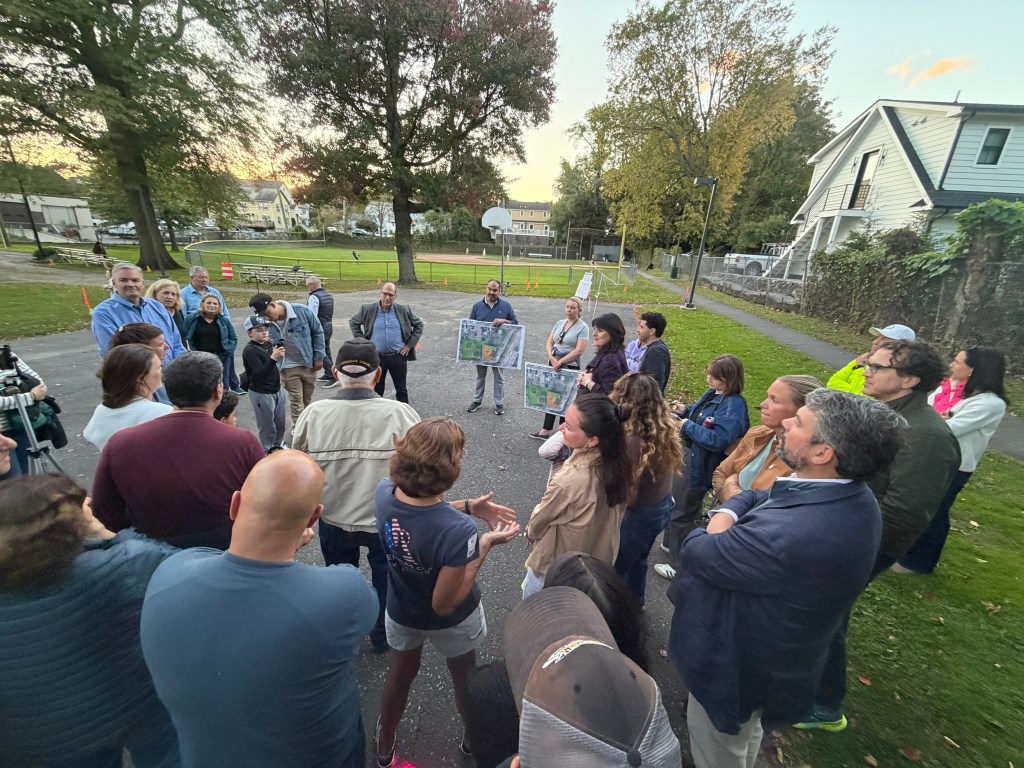
The future of Gagliardo Park was discussed between residents, city staff, the Rye Recreation Commission, and the Rye City Council during a discussion in the park on Thursday, October 8, 2026. A rough count of approximately 30 local residents and 20 staff and officials gathered in the park Thursday evening for the discussion.
Most of the conversation was run by Rye City Engineer and Head of the Department of Public Works (DPW) Ryan Coyne. He marched around the park with a rendering of what a park refresh could look like, stopping in various locations to show field orientations, bathrooms, basketball courts, possible parking, noise attenuation from I-95, infrastructure underground to slow flooding and a myriad of other options.
The discussion was the most substantial since the Rye Recreation Commission meeting back in May that also focused on the parks’ possible revitalization.
“We don’t want to invest the money that this is, with or without a parking lot, with or without a batting cage,” said Coyne. “We don’t want to redo the park and then have it flood as regularly as it does, right? I don’t know that we can solve every single flood, but we can make it better.”
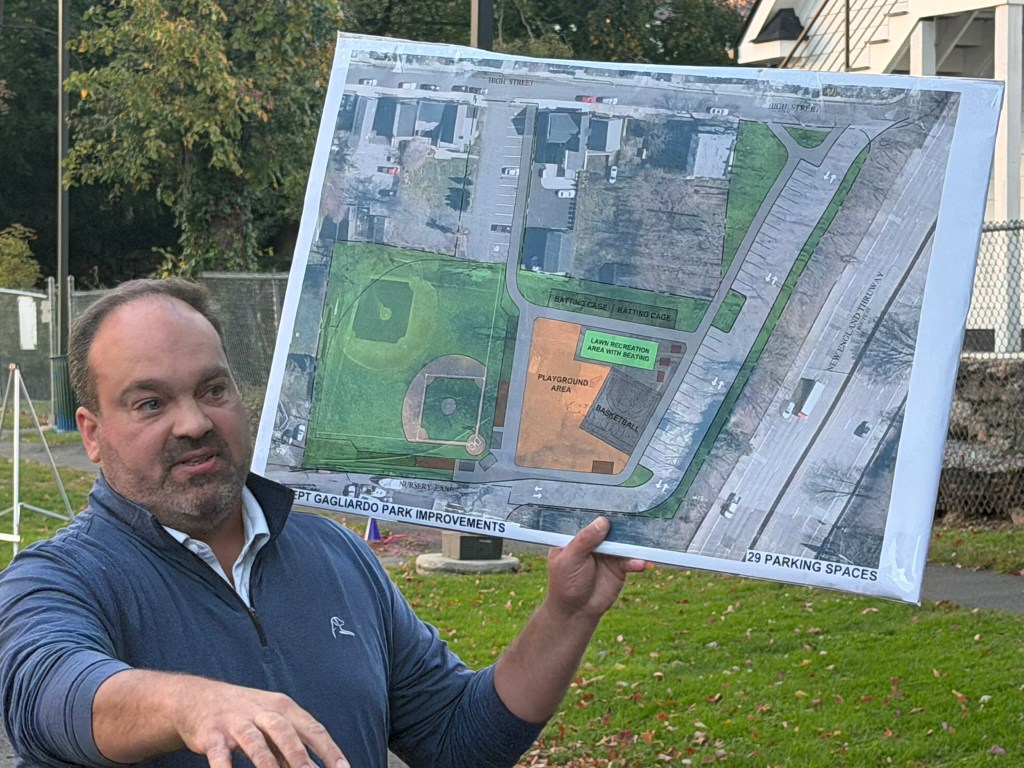
Embraced by most residents seems to be the refreshed baseball field, possibly with a new orientation, an NBA-size half-court basketball area and a new playground area. A seating area and possible batting cages are also on the list of possibilities.
Residents at the roving meeting at Gagliardo seemed to raise most concern about a possible new 29 parking spaces and what that might do to the little remaining green areas with trees. Residents expressed concern that there be enough green space enough space to walk their dogs.
The parking concern is both for any parkland taken for cars as well as how that might change traffic or other activity on High Street and through the neighborhood. The parking situation is already severe in the neighborhood especially when the baseball field is used for Little League. Success related to noise attenuation will largely rely on the success or failure of officials to get the New York State Thruway Authority to set up noise-attenuating walls along the interstate.
Watch the meeting (leave any comments below):
