

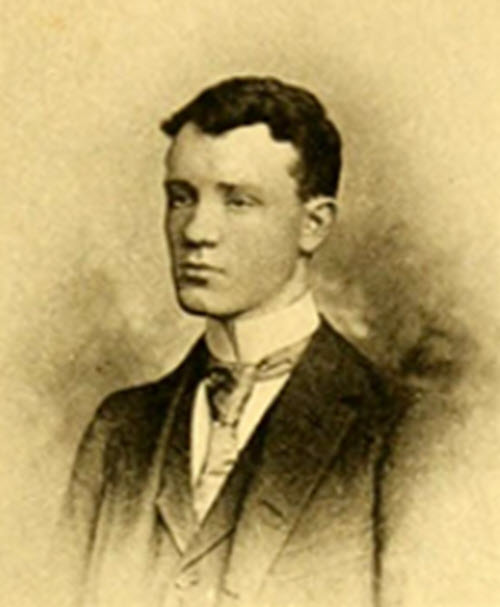
When residents walk through the doors of Rye City Hall or look back on the historic civic growth of our coastal city, they encounter the legacy of John Motley Morehead III. A chemist, industrial executive, diplomat, and philanthropist, Morehead served three terms as Mayor of Rye and left a lasting mark on the community.
Early Life and Industrial Career
John Motley Morehead III was born on November 3, 1870, in Spray, North Carolina. He came from a prominent Southern family and was the grandson of former North Carolina Governor John Motley Morehead. He graduated from the University of North Carolina at Chapel Hill in 1891 with a degree in chemical engineering.
Early in his career, Morehead became involved in the development of an economical process for manufacturing calcium carbide. While working with his father’s Willson Aluminum Company, Morehead and others experimented with the production of the compound, an important development in the emerging field of industrial chemistry. The work helped lay the groundwork for the industrial enterprises that would eventually become associated with Union Carbide, where Morehead would become a key executive and major shareholder.
During World War I, Morehead served as a major in the United States Army after volunteering for military service despite being over the usual age for enlistment. He was assigned to the War Industries Board under Bernard Baruch, where he served as chief of the Industrial Gases and Gas Products Section.
Life and Leadership in Rye
Following his military service, Morehead moved to Rye, New York, in part to be near Carbide Corporation laboratories at Niagara Falls and Long Island. He soon became involved in local civic affairs.
In 1925, Morehead was elected Mayor of Rye. He served three terms, remaining in office through 1930, during a period of significant suburban growth in Westchester County.
Morehead’s public service extended beyond Rye. In 1930, President Herbert Hoover appointed him United States Minister to Sweden, a diplomatic position he held until 1933. During his time in Sweden, Morehead received the Gold Medal of the Royal Swedish Academy of Sciences.
The Gift of Rye City Hall
Morehead’s most visible and enduring contribution to Rye came decades later.
In the early 1960s, Rye was considering issuing municipal bonds to finance a new city hall. Morehead believed the city deserved a building that was more compatible with Rye’s historic character. He ultimately planned, had built, and donated a new municipal building to the city.
Designed in a neo-Georgian style, the building was dedicated on December 5, 1964, and remains Rye City Hall today.
Morehead was unable to attend the dedication in person. He was recovering in a hospital from a broken hip after falling while hurrying from his Union Carbide office to catch his commuter train home to Rye. Instead, he listened to the dedication ceremony by radio from his hospital bed.
The gift reflected Morehead’s longstanding connection to Rye and his interest in preserving the character of the community where he had made his home.
Philanthropy and Legacy
Morehead’s philanthropic interests extended well beyond Rye. He was a major benefactor of the University of North Carolina at Chapel Hill, where he established the Morehead Foundation in 1945.
The foundation later supported the Morehead Scholarship, established in 1951 and described by the Morehead-Cain Foundation as the first merit scholarship in the United States. The program was later renamed the Morehead-Cain Scholarship following a major gift from the Cain family.
Morehead also provided significant support for the University of North Carolina’s Morehead Planetarium, which opened in 1949, helping establish it as an important center for science education and public outreach.
John Motley Morehead III died at his home in Rye on January 7, 1965, at the age of 94, just weeks after the dedication of the city hall he had given to the community.
Today, Morehead’s legacy can be seen in one of Rye’s most familiar civic landmarks. His career stretched from industrial chemistry and national wartime service to diplomacy, philanthropy, and local government, but his connection to Rye remains especially tangible: the city hall he helped create continues to serve as the center of municipal life more than six decades after it was dedicated.