

Birds of Rye is an editorial series highlighting the resident and migratory birds of Rye. If you would like to contribute bird photography, or if you have feedback on this series, please contact us.
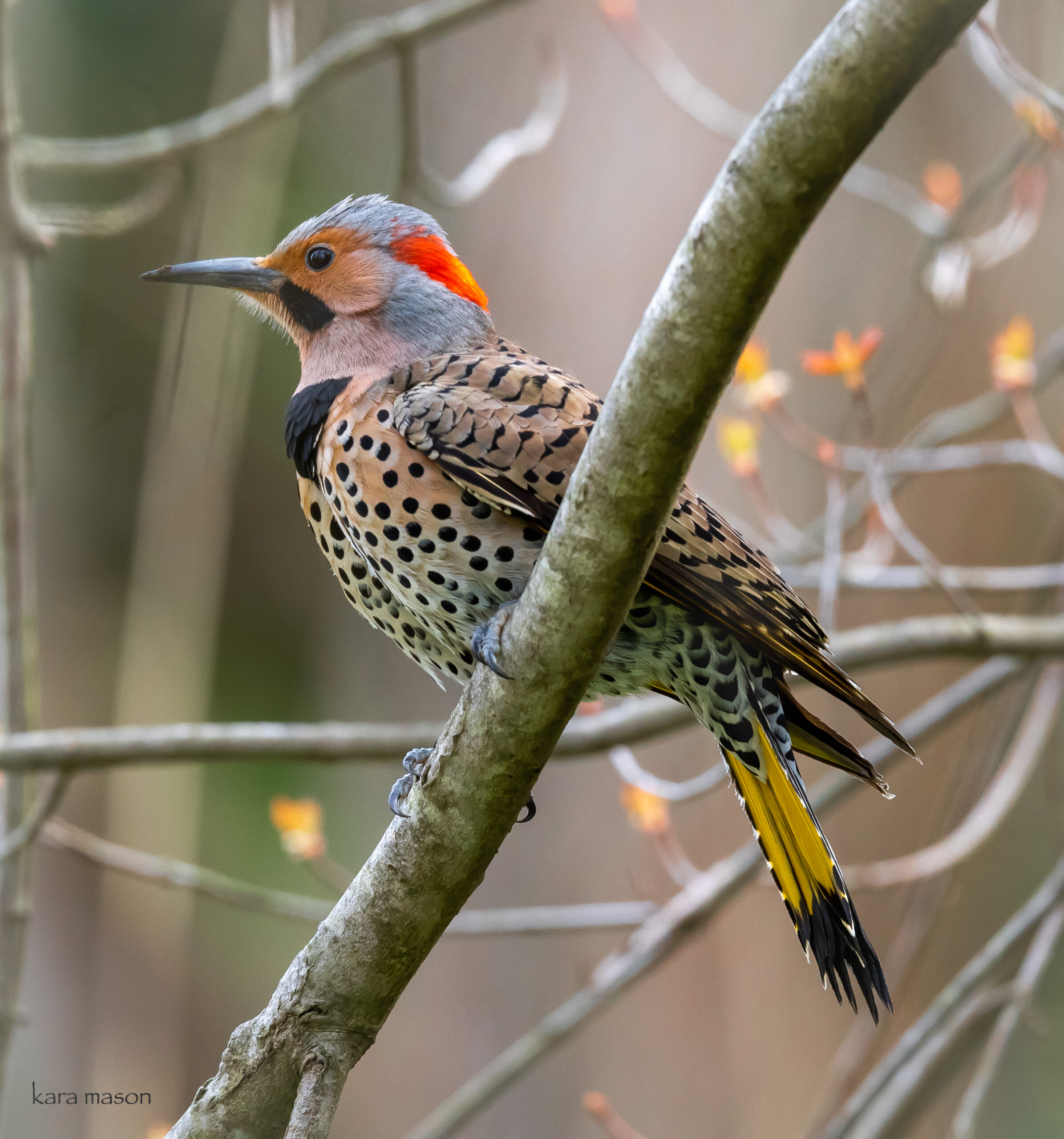
The Northern Flicker (Colaptes auratus) is described by eBird as a “large, brownish woodpecker with black barring on the back and black spots on the belly. Easily recognized in flight by its bright white rump. Also note large black crescent-shaped mark on breast. Wings and tail flash yellow or red, depending on the subspecies. Generally “Yellow-shafted” is found in eastern and northern North America, and “Red-shafted” is found in western North America as far south as Oaxaca. Typically singly or in pairs, but can gather in large loose groups during migration and winter. Often seen feeding on the ground in open areas, foraging for ants and worms. Vocal and conspicuous: listen for loud “kleer!” call and series of laughing notes.”
It is a species of Least Concern and is present in Westchester County year-round. It is especially prevalent from April to November.
See:
- eBird factsheet on the Northern Flicker (Colaptes auratus)
- Current eBird sighting data for the Edith G. Read Wildlife Sanctuary and the Marshlands Conservancy
- MyRye.com story archive for Edith G. Read Wildlife Sanctuary and the Marshlands Conservancy.
- Upcoming birding events in Rye
The Marshlands Conservancy and the Edith G. Read Wildlife Sanctuary, located in Rye, New York, are two of the region’s most significant birding destinations. Together, they comprise over 300 acres of diverse coastal habitats, including tidal marshes, mudflats, deciduous forests, and open meadows. These features make them critical stopover points and nesting grounds for migratory and resident birds. Due to their ecological importance, both areas have been designated as an Important Bird Area (IBA) by the Audubon Society, recognizing their role in sustaining bird populations, including rare and threatened species.
Prime Birding Seasons
While birding is productive year-round, the busiest and most exciting times are during spring and fall migration. In spring (March–May), birds return from their wintering grounds, filling the forests and wetlands with song as they prepare for breeding. Fall (September–November) sees another influx, as thousands of warblers, raptors, shorebirds, and waterfowl stop to rest and feed before continuing their journey south. The winter months bring diving ducks and raptors like the rough-legged hawk, while summer offers excellent opportunities to observe nesting species, including the great egret and wood thrush.
Why These Areas Matter
The Marshlands Conservancy, a 147-acre nature preserve, is known for its large salt marsh, a habitat that is rapidly disappearing due to coastal development and climate change. Salt marshes provide vital food resources for migrating shorebirds such as greater yellowlegs and semipalmated sandpipers. Additionally, the forested uplands host neotropical migrants like scarlet tanagers, Baltimore orioles, and black-and-white warblers.
The Edith G. Read Wildlife Sanctuary, covering 179 acres along Long Island Sound, features brackish and freshwater ponds, supporting an abundance of waterfowl and wading birds. The sanctuary’s shoreline attracts wintering species such as the long-tailed duck and red-breasted merganser, while its wooded areas provide shelter for eastern screech owls and red-shouldered hawks.
Notable and Rare Species
Birders visiting these areas have the chance to observe some rare and threatened species. The saltmarsh sparrow, a declining species due to habitat loss, is occasionally seen in the Marshlands Conservancy. The piping plover, a federally threatened shorebird, has also been recorded along the coastal areas. Additionally, ospreys, once nearly eliminated due to DDT pesticide use, now nest successfully in both sanctuaries.
With their rich habitats and essential role in bird conservation, the Marshlands Conservancy and Edith G. Read Wildlife Sanctuary are treasured destinations for birdwatchers and a refuge for avian life along the Hudson River flyway.
About the Photographer
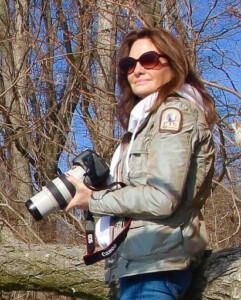
Kara Mason is a nature photographer who resides in Pleasantville. She sold her dental practice in Manhattan and now pursues her outdoor passions of birding, gardening, travel and photography.
Mason is a board member of Saw Mill River Audubon and active on their advocacy committee. She worked to help pass the ban of Neonic pesticides in New York State and is involved in public education about invasive flora and the promotion of pollinator gardens. She is a member of Pleasantville Garden Club’s board as well.
Mason’s photos, taken over many seasons, are from these two Rye preserves, including images she captured while kayaking. Her work has been featured in local photography shows, Audubon Society calendars and birding webinars.
In her words, “Birds are the harbingers of the health of our environment. They come from afar and stop at many places along their migratory routes. Birds depend upon available food, water and shelter at each layover. If any resource on their sojourn is diminished, the entire species is negatively affected. Marshlands and Read are uniquely positioned on Long Island Sound’s migratory flyway. They boast tidal estuaries, forests, grassland meadows, bramble thickets, a brackish lake, shoreline, protected harbor, and bird feeders, thus providing crucial ecosystems to more than 200 species of birds. We are truly lucky to have these diverse environmental gems right here in Rye!”
This article was written with the assistance of artificial intelligence. We welcome your feedback.