


RyeGPT People of Note is a series highlighting individuals who have a connection to the City of Rye. In the series we ask OpenAI’s ChatGPT to prepare a biography and explain the individual’s connection to Rye.
We welcome your feedback on this series – the use of artificial intelligence, the accuracy and usefulness of each article and your assistance in understanding other pertinent insights related to the person’s connection to Rye.
You can add comments at the bottom of each article or you can send feedback via Tips & Letters.
Mary Rutherfurd Jay (1872–1953) was a pioneering American landscape architect, horticulturist, and advocate for conservation. One of the first professional female landscape architects in the United States, she was instrumental in shaping the profession during the early 20th century and played a key role in developing American estate gardens that blended formal European influences with native plantings and environmental awareness.
Early Life and Education
Mary Rutherfurd Jay was born on August 8, 1872, into a prominent family deeply rooted in American history. She was the great-great-granddaughter of Founding Father John Jay, the first Chief Justice of the United States and a key figure in American diplomacy. Her family legacy influenced her lifelong sense of civic responsibility and public service.
Jay received a private education and later studied landscape architecture in Europe, including time at the Sorbonne in Paris. Her extensive travels and studies gave her a strong grounding in classical European garden design, which she later adapted to American contexts. She also studied at the Lowthorpe School of Landscape Architecture for Women in Massachusetts, one of the only institutions at the time offering formal training to women in the field.
Career and Contributions
Jay began practicing professionally in the early 1900s, becoming one of the first women to establish her own landscape architecture firm. Her designs were noted for their integration of native plants, sensitivity to natural topography, and attention to sustainability—principles that were ahead of their time.
She designed numerous private estates, many of which were in the Northeast, including in New York and Connecticut. Her work extended beyond garden design: she advocated for reforestation, soil preservation, and landscape preservation well before these were mainstream conservation concerns. She was a member of the Garden Club of America and frequently lectured on horticulture and design.
Mary Rutherfurd Jay was also an early advocate of the Colonial Revival style, which influenced her work in designing gardens that reflected both classical principles and early American traditions.
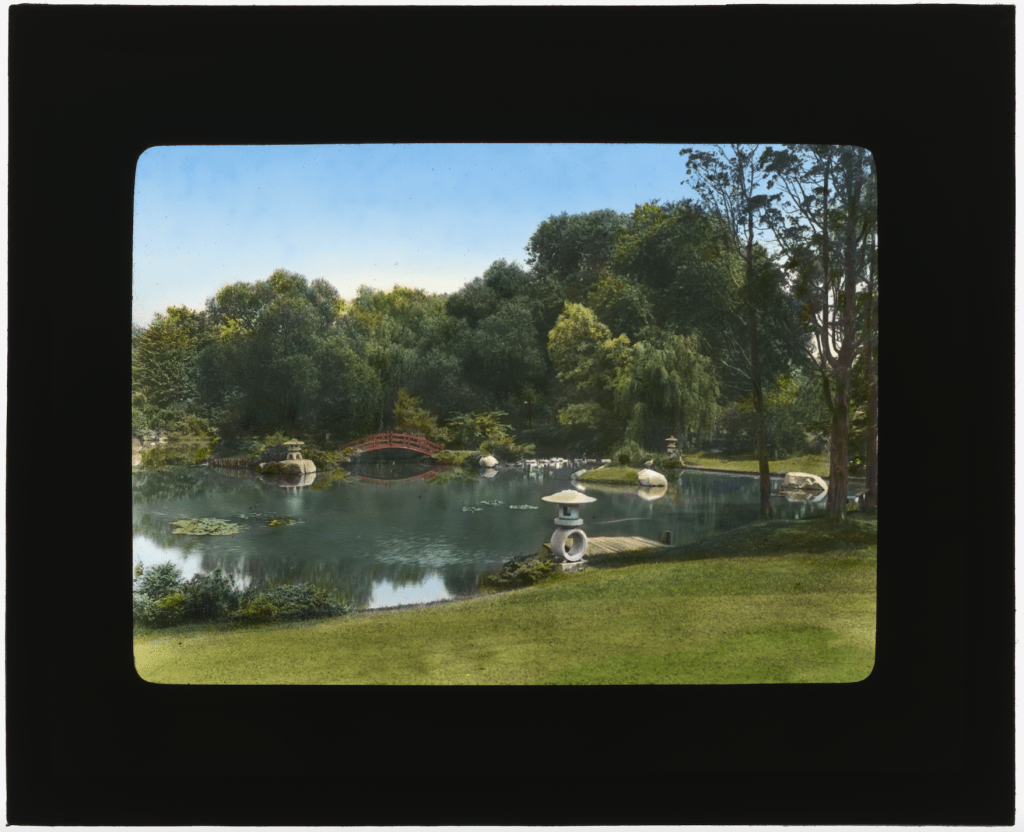
Connection to Rye, New York
Mary Rutherfurd Jay had a profound and personal connection to Rye, New York. She lived at the historic Jay Estate—originally owned by her illustrious ancestor John Jay—located off the Boston Post Road. The estate served as both her home and, at times, a working canvas for her landscape experiments.
Jay took a strong interest in preserving the family property and its historical significance. In the early 20th century, she led efforts to maintain the grounds and integrate her own designs into the existing landscape. Elements of her work remain visible at the Jay Estate today, which is now part of the non-profit Jay Heritage Center and listed on the National Register of Historic Places.
Later Life and Legacy
Mary Rutherfurd Jay continued to practice and lecture into the 1940s, though she never sought widespread publicity for her work. She passed away in 1953, but her influence has grown in recent decades as scholars and historians have reevaluated the contributions of women in architecture and landscape design.
The Jay Estate in Rye remains a testament to her legacy, reflecting both her family’s historical importance and her own vision for harmonious, ecologically sensitive design. Today, her contributions are honored through continued preservation efforts and educational programming at the Jay Heritage Center.