

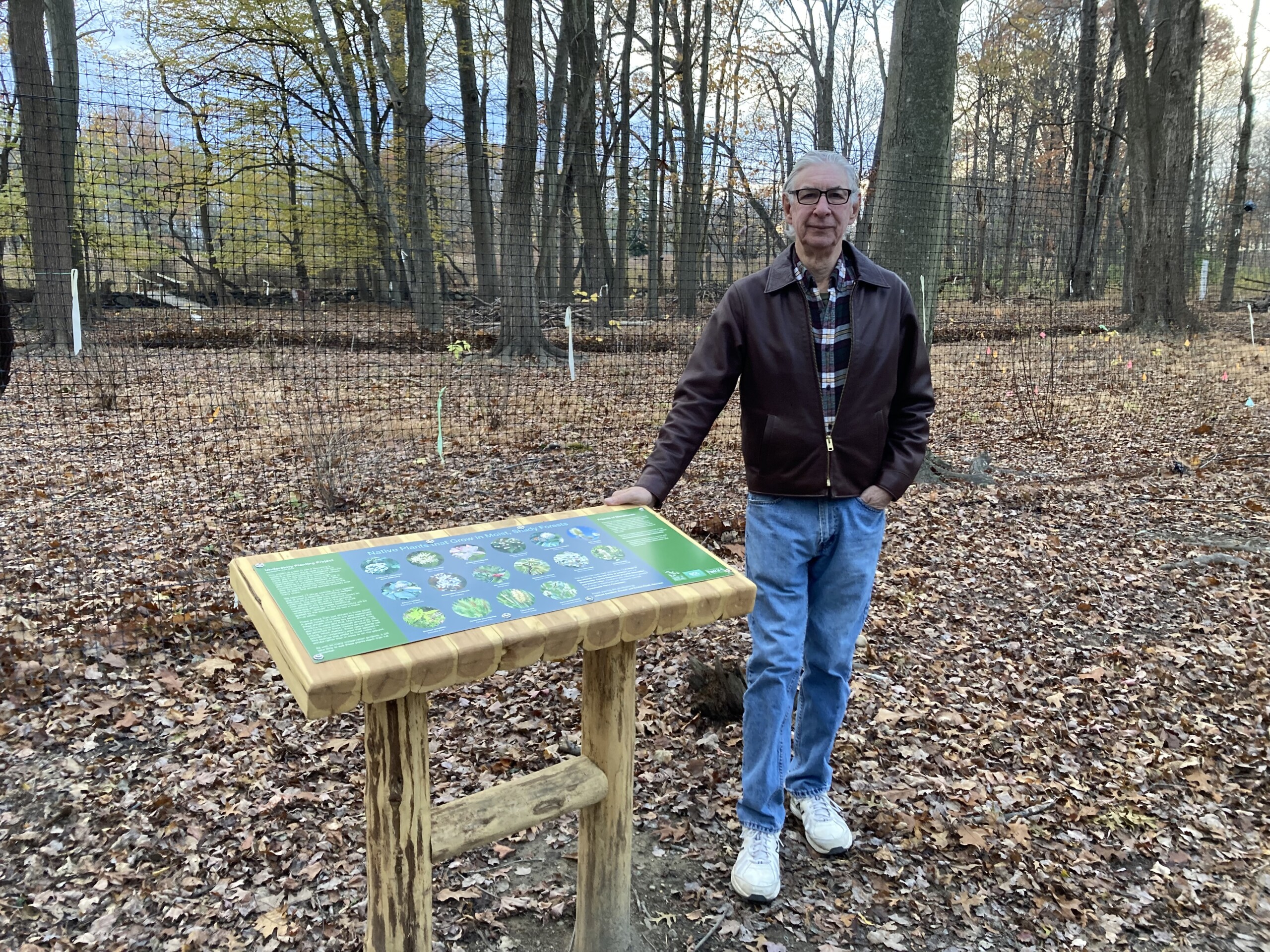
Giving Rye is a feature series highlighting non-profits and community groups in and around the City of Rye. Today meet David Styler of the Friends of Marshlands, Inc.
Name: David Styler
Organization: Friends of Marshlands, Inc.
Your Role: Secretary and board member. My role is to take minutes at our monthly meetings, to help create written communications such as informational brochures about Friends of Marshlands, and to proofread and edit documents intended for signage within the Marshlands Conservancy for future or ongoing initiatives, such as the Goats Grazing in the Meadow project. I have also assisted in processing donations and membership contributions, planting understory shrubbery, guiding history tours of the Conservancy, and performing other necessary tasks related to our mission. Fellow board member Sarah O’Keefe and I are most proud of revamping and updating our new website, making it much more user friendly. I am not unique in wearing multiple hats: all our board members pitch in to help Marshlands Conservancy in any way we can.
MyRye.com: Tell us your organization’s mission.
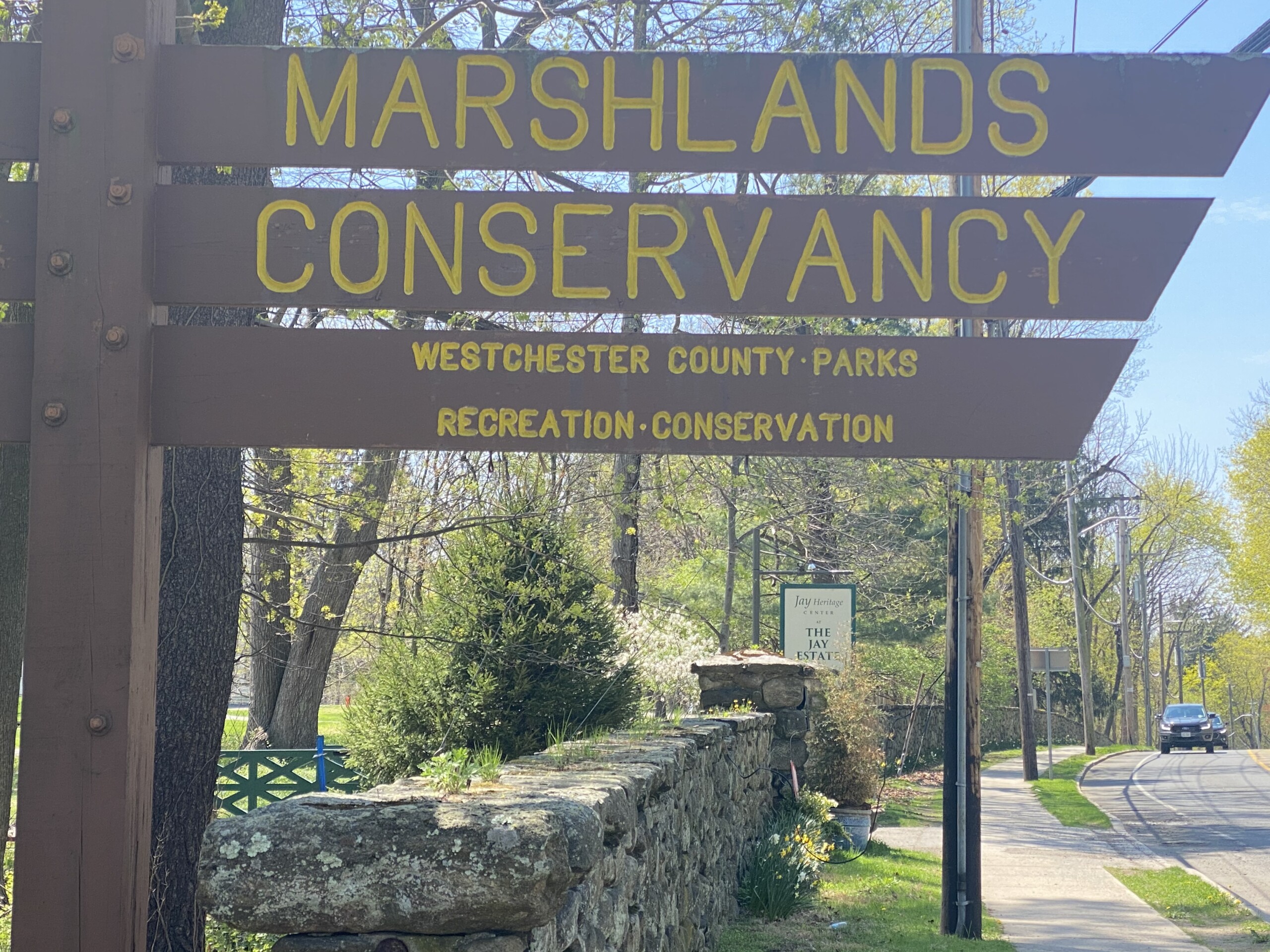
Styler: Friends of Marshlands, Inc. is a nonprofit volunteer organization that supports the Marshlands Conservancy, a wildlife sanctuary and nature preserve owned and operated by the Westchester County Department of Parks, Recreation and Conservation. We are dedicated to promoting the protection, preservation, and enhancement of the Conservancy, fostering a deeper understanding of nature, and working to sustainably mitigate the effects of climate change.
How long have you operated in Rye?
Styler: Friends of Marshlands was founded in 1978, six years after Marshlands Conservancy opened. We will be celebrating our 50th anniversary in 2028. The Conservancy is located at 220 Boston Post Road in Rye, NY 10580.
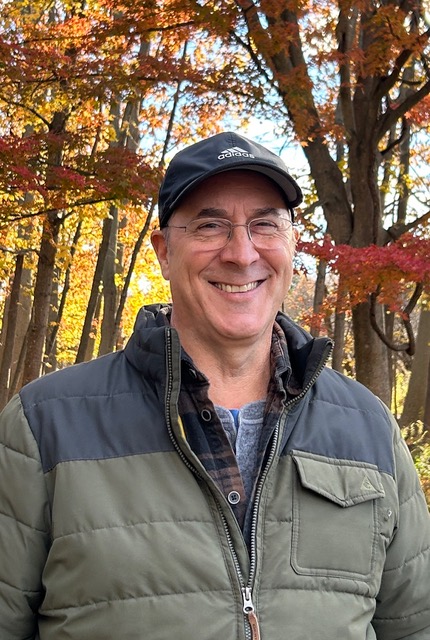
We work in collaboration with the Nature Center curator, Michael Gambino, and the Westchester County Department of Parks, Recreation and Conservation, which owns and operates 50 County parks comprising 18,000 acres. We are linked with other Friends groups in the Countywide parks system, including the Friends of Edith G. Read Wildlife Sanctuary, also in Rye, and Hilltop Hanover Farms, which provides some of the native grasses and seeds recently planted at Marshlands.
The Westchester Parks Foundation also provides additional volunteers needed to carry out some of our projects and are a source of additional funding.
What programming or work in Rye is Marshlands best known for?
Styler:
- Marshlands Summer Nature Camp: Marshlands is well known for Marshlands Summer Nature Camp, year-round school and community group activities, and weekend programs, for which Friends provides supplemental funding. In recent years, the Friends of Marshlands has provided scholarships for summer campers, bought supplies and materials for summer camp activities, and paid for equipment such as sturdy open sided tents that provide shade on hot sunny days and protect campers from rain.
- Ongoing Curator Specialist Education Courses: The Friends also funds opportunities for our curator and assistant curator to attend educational and professional collaborative programs. Recent examples are a native grasses course at Eagle Hill Institute and a soil science course at University of Washington Botanic Gardens, both attended by Curator Michael Gambino, and a presentation by Assistant Curator Kristen Lu Pareti, at the Northeast Natural History Conference in Springfield, Massachusetts, of her 2024 moth survey research conducted at Marshlands Conservancy.
- Habitat restoration projects in the forest, meadow and salt marsh: The Friends of Marshlands has implemented new conservation programs that help to increase the biodiversity of our forest. In recent years, this habitat has been threatened by deer over browse and climate change. Last year, 120 native understory shrubs, 100 fern plants and 500 sedge plugs were planted in forest plots by the Friends of Marshlands and volunteers from the Westchester Parks Foundation. This year, the success of these plantings was evaluated – nearly all of them survived the winter and last year’s very dry conditions.
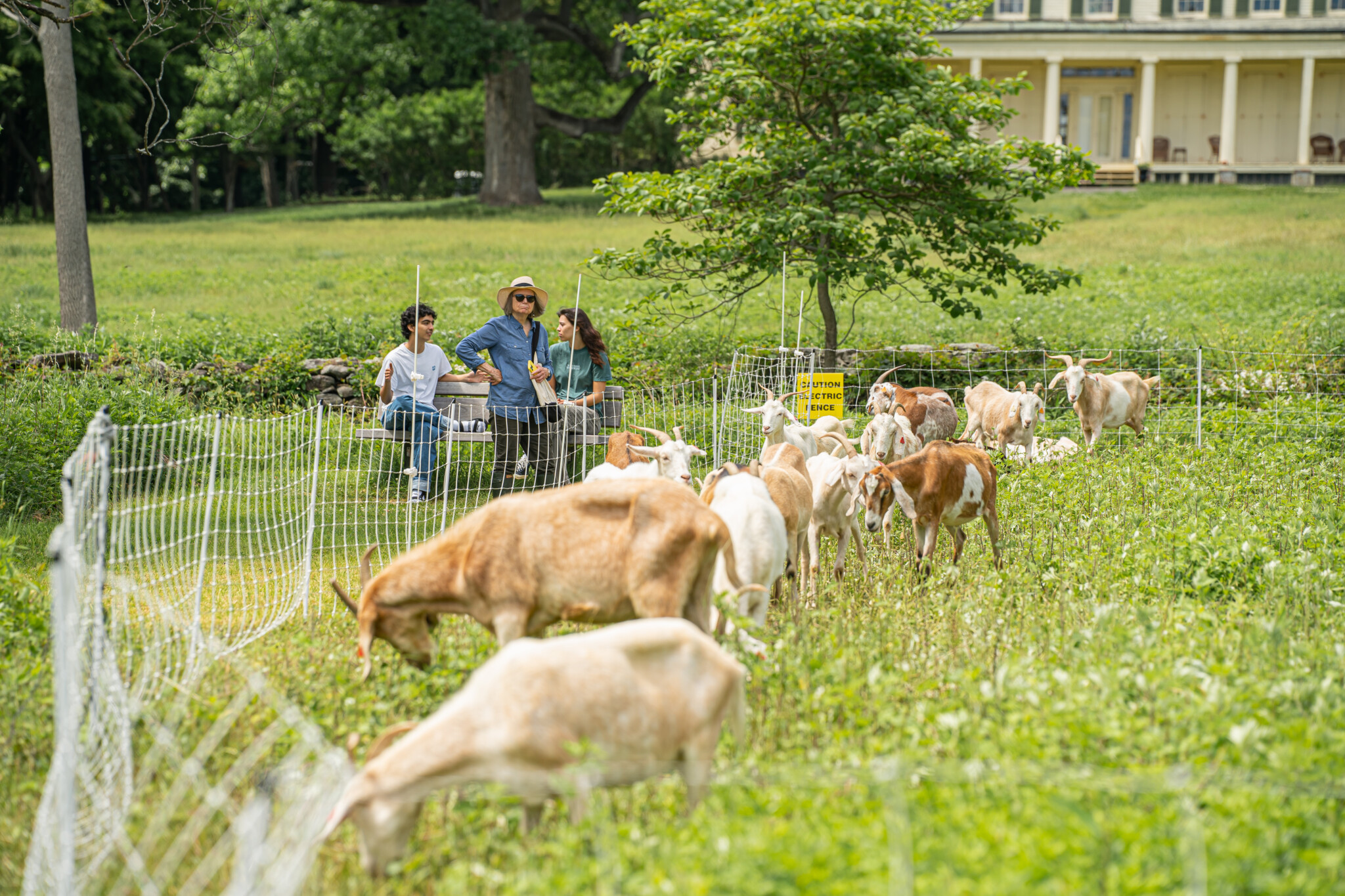
- In spring, the grant-funded goats grazing in the meadow project continued for its second year of a three year test project, in an effort to establish a sustainable, non-mechanical approach to meadow management and better control the spread of invasive species, As in our first year, Friends of Marshlands funded 30 “Fat and Sassy Goats” to graze one acre of the Marshlands meadow for ten days within an electric fence. The goats munched on the dense stands of invasive mugwort, allowing air and sunlight to reach the seeds below, encouraging native grasses and wildflowers to return.
Looking forward to 2026, what will be your top initiatives?
Styler: We will be funding both new and ongoing projects.
- In spring we will be funding, mostly through a grant, the 3rd and final year of the Goats Grazing in the Meadow project. At its termination, we will also purchase native grass and wildflower seeds from the Westchester County-run Hilltop Hanover Farms to plant in the grazed areas to help restore the meadow
- The Friends plan to support a new project near the bird feeders that entails planting new understory shrubs with a woodchip trail meandering through.
- In addition, the Friends will be purchasing more understory shrubs, with an existing grant, to be placed within deer exclosures in the forest, increasing biodiversity and helping to stem erosion.
- The Friends will also help to address the problem of the large brush piles that now dot the forest just behind the Nature Center. We will fund a wood chipping operation, which will not only eliminate these brush piles, but will create a large amount of mulch that can be put to good use for future shrubbery plantings and trails.
- We will be applying for other grants to help fund new projects.
Tell us about the population you serve and how they can get involved with your programming and services.
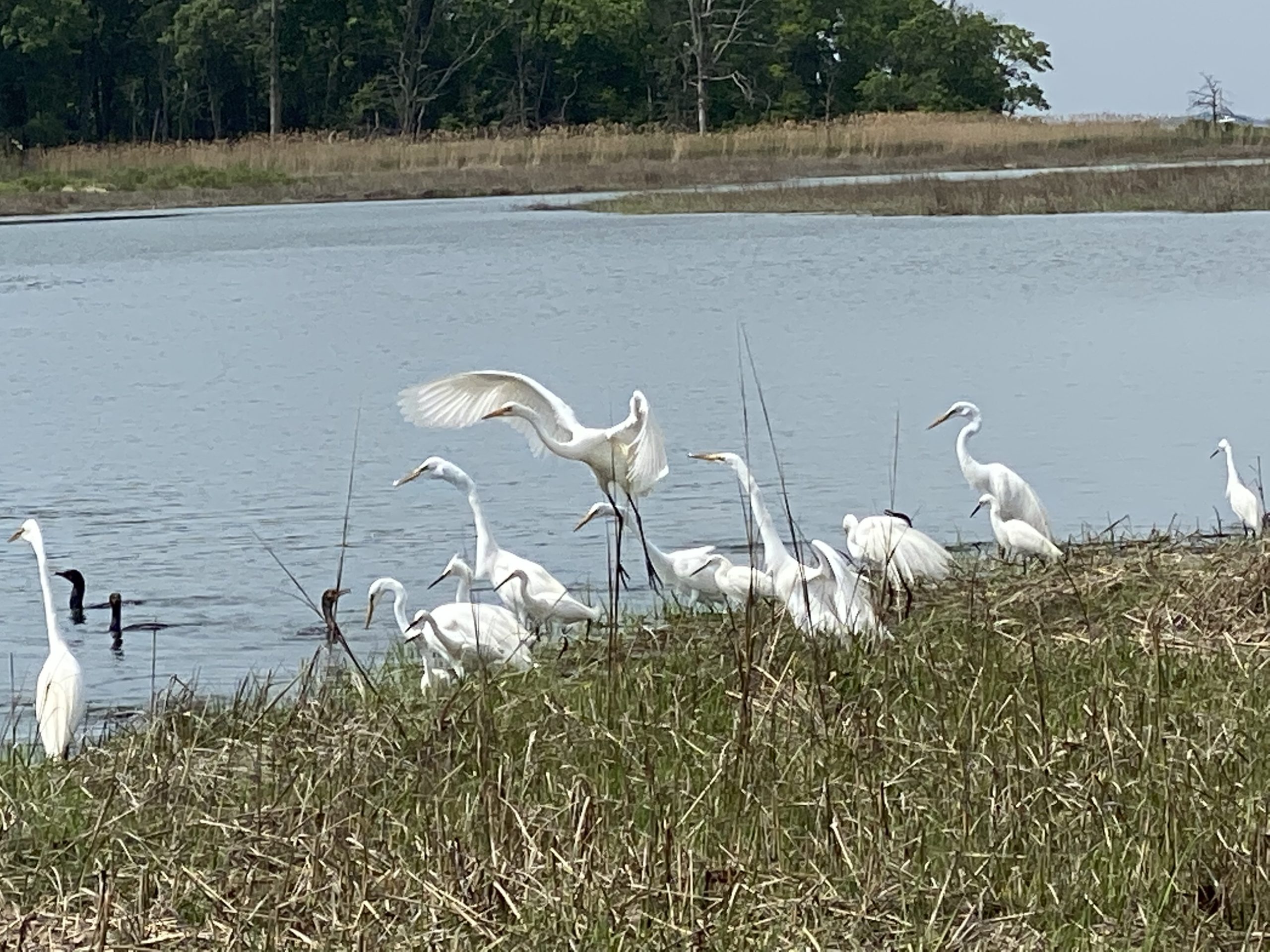
Styler: Marshlands is not only popular and beloved by local residents from Rye, including couples, families with young children and groups of friends, but also with visitors from all over the county, all over the U.S. and from all over the world. The population is diverse, drawing from avid birders, photographers, hikers, walkers, runners, and tourists. Many who grew up here as children, but moved away, come back here to remember fondly their childhood spent at Marshlands. During the pandemic about 29,000 people visited Marshlands Conservancy.
Local residents can support our organization by visiting Marshlands to see this magnificent conservancy, and reading about the five different unique habitats on our website. Then they can become informed members!
There are many volunteer opportunities, including removing litter, maintaining trails, removing invasive plants, planting native shrubs, rebuilding wooden bridges and seats, building and putting up bluebird boxes, brown bat houses, or bug hotels, and other activities as determined by Curator Michael Gambino, who works with Mary Benjamin, volunteer coordinator for the Westchester Parks Foundation.
You can fulfill your community service hours while learning more about the history and habitats of the conservancy. The volunteers are a group of individuals of all ages, backgrounds, and walks of life, who have a love and appreciation of nature and the unique history of the conservancy.
Are you a 501(c)(3) non-profit with tax exempt status?
Styler: Yes, a 501(c)3 nonprofit with tax exempt status, all volunteer organization.
Looking back across 2025, what were your organization’s top achievements?
Styler: It’s difficult to say, because we’re proud of so many different initiatives, but here’s a sampling:
Educational Initiatives: The Friends funded a study titled “Who Were the Native American Inhabitants that Originally Greeted European Visitors to Poningo (Present Rye)?” by Dr. Lucianne Lavin, Director Emerita of Research and Collection, Institute for American Indian Studies. This is available to read on our website, along with other studies performed by scholars and experts at Marshland Conservancy.
Fun and Learning for the Community: The Friends supported what we plan to be an annual event called Fairy Tales and Trails. On May 24, over 60 children and their parents attended a Friends- funded event led by Master Storyteller Jonathan Kruk, which wound through the forest and meadow, stopping to gaze at fairy dwellings (created by Curator Michael Gambino and Assistant Curator Kristen Pareti), and enchanting children and adults alike.
In addition, we have supported repeat appearances by wildlife educator Anthony Cogswell, who again this year at our annual meeting at the nature center, brought his exotic animal collection, thrilling youngsters who wish to get up close and personal with a variety of snakes, turtles, and other denizens of the natural world.
At the nature center: The 3D map, which we paid for, was installed in the nature center this year. It’s a very high-tech topographical rendering of Marshlands, including the forest, pond, marsh, shoreline, meadow, and even trails. Kids love it.
Another item we funded, the herbarium cabinet, has now been installed, giving our curator and assistant curator the storage facility needed for the hundreds of specimen mountings they have worked on. The Friends have also paid for the mounting supplies needed to create these lasting records of the trees, shrubs, and other botanical features that exist at the Conservancy. On November 15, the public was invited to a new program, “Naturalists at Work,” at which Michael and Kristen demonstrated how they create these mountings.
How can local residents support your organization?
Styler: Our programming work is funded by annual membership donations, grants and bequests. We have a fundraising mailing at the time of our annual meeting. All donations are tax exempt as permitted by law. Membership runs from January 1st-December 31st. If you join after October 1st your membership runs through the following December (i.e. 15 months). We have membership at all levels.
What Rye residents and area businesses have been the longest and steadiest supporters?
Styler: David Parsons and his family have been the longest and most steadfast supporters of Marshlands Conservancy, even before its inception as a county park in 1972. In 1905, the Parsons family preserved the future Marshlands Conservancy by refusing to allow The New York and Port Chester Railroad to cross their land even as the rail bed had already been laid across the Jay estate, owned then by the fifth generation of the Jay family, thus preserving the area now called Marshlands Conservancy. In 1978 David Parsons’ aunt, Fanny Wickes Parsons donated 27 acres of their land, known as Parsons’ Pond and Parsons’ Island to Marshlands Conservancy
Tell us about you:
How long have you been in your current role?
Styler: I have been on the Board of Directors of the Friends of Marshlands for almost four years.
Is the role full time or part time? Paid or volunteer?
Styler: Volunteer. It’s not full time, but it can get busy.
How would your friends and family describe you in one word?
Styler: Earthy
Where did you grow up?
Styler: I grew up in the Bronx in the Pelham Parkway section, in a house with a large backyard and a white picket fence. It was quite private.
What principles guide you when you have to make a difficult decision?
Styler: I have always been guided by my instincts, rather than a formal cost/benefit analysis. Perhaps it shows hubris, but I tend to believe I am right, until proven otherwise, which sometimes happens.
Can you share a time when failure taught you more than success ever could?
Styler: I taught at a university for 35 years, but for the first five years, I’d say, I was a terrible instructor. No one really blew the whistle on me, but in speaking with other professors I admired, I realized I had to be more understanding of my students’ needs-which I suppose is the same as empathy-and be as prepared as I could for each class. I became a respected faculty member and to this day my former students keep me informed about their lives.
What excites you most about the future—for yourself or for the world?
Styler: I’m really sorry, but at this moment in time I cannot summon up any excitement about the future of the world, although I am excited about the future of Marshlands. Ask me again in about three years.
Where do you live and how many years have you lived there?
Styler: I have lived in the Village of Mamaroneck – the Rye Neck section-for 31 years.
Thanks David!
Learn More: