

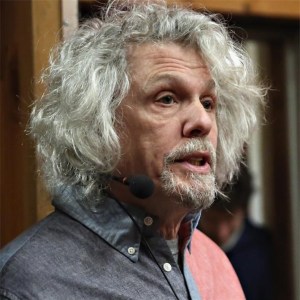
Bob Power, the two-time Grammy-nominated record producer, audio engineer, and educator whose meticulous ear helped shape the sonic identity of hip-hop and R&B for more than three decades, died March 1, 2026. He was 73.
Tributes from the music world poured in immediately. DJ Premier shared the news on social media, writing, “R.I.P. to one of the iLLest Engineers of all time.”
Born in Chicago on January 2, 1952, Power was just 10 years old when he began playing his sister’s guitar. His family moved to Rye, New York, and then to St. Louis, where his formal musical education began. He studied classical theory and composition at Webster University in St. Louis, while at the same time joining his first rock and roll band, the New Direction. After graduating, he headed west, earning a master’s degree in jazz from Lone Mountain College in San Francisco, gigging constantly while also beginning to compose for television.
Those California years, spanning 1975 to 1982, proved foundational. Power composed the score for PBS’s Emmy Award-winning series “Over Easy,” alongside commercials for Coca-Cola, Hertz, Intel, and Mercedes-Benz. By his own wry account on his official website, the years after his 1982 move to New York City involved every conceivable gig: “bad dance records, mafia weddings in Bensonhurst for $75, psychiatric hospitals (yes, really).” It was the kind of hustle that built extraordinary range.
The pivot that would define his legacy came when Power was approached by the owner of Calliope Productions to assist as an engineer on Stetsasonic’s debut album “On Fire,” released via Tommy Boy Records in 1986. That connection drew him into New York’s thriving hip-hop underground and, soon, into the orbit of the Native Tongues collective: A Tribe Called Quest, De La Soul, Black Sheep, and the Jungle Brothers.
Power helped shape the sound of hip-hop and R&B in the early 1990s as he worked with Native Tongues members and other artists, especially when it came to plumbing deeper drum and bass grooves. His crowning achievement from this era was engineering A Tribe Called Quest’s 1991 sophomore album “The Low End Theory,” a record that redefined what hip-hop could sound like and, for many listeners, what it could feel like.
Through the mid-1990s and into the 2000s, Power became the quiet architect behind the Soulquarians movement. He mixed or engineered genre-defining albums including D’Angelo’s “Brown Sugar,” Erykah Badu’s “Baduizm,” Common’s “Like Water for Chocolate,” and The Roots’ “Things Fall Apart.” Badu’s single “On & On” gave Power his first number-one R&B hit, and he earned Grammy nominations for his work on Me’Shell Ndegeocello’s “Peace Beyond Passion” and India.Arie’s “Acoustic Soul.”
Power’s discography kept expanding well into the new millennium. He collaborated with artists like Common, Talib Kweli, J Dilla, David Byrne, and Brockhampton. He contributed to the2022 posthumous Phife Dawg album “Forever,” while his final credits included Ndegeocello’s 2023 LP “The Omnichord Real Book” and China Moses’ “It’s Complicated…,” released in 2025.
Colleagues remembered him not only for his technical command but for his generosity of spirit. Questlove wrote on Instagram: “Bob was our training wheels for how to present music. I’m so devastated by his passing. Thank you for changing all of our lives.” Badu, whose voice Power helped make historic, was equally direct. “You taught me soo much,” she wrote. “Baduizm is thee most bass heavy singing album in history. You mixed like a TRIBE album!”
In his later years, Power brought that same generosity into the classroom, serving as a professor at the Clive Davis Institute of Recorded Music at New York University’s Tisch School of the Arts.
Power is survived by his sister, Robin Power. In lieu of flowers, the family suggests memorial donations to National Public Radio (NPR).
