

Holding Court is a column by retired Rye City Court Judge Joe Latwin. Latwin retired from the court in December 2022 after thirteen years of service to the City. Latwin appeared on Episode 8 of Season 1 of our podcast MyRye.com Conversations with Doug French. Listen to learn more about Latwin and the Rye City Courts.
What topics do you want addressed by Judge Latwin? Tell us.

Required Minimum Distributions
You diligently saved money while you were younger. You put some of that money in an IRA or a 401k. When you put that money in, the amount you put in was not included in your income so you paid no income taxes on that income. Under the rules, the money in an IRA or 401k grew tax deferred, free of current income. So, if you put $100, you paid no income taxes in the year you put it in. If it earned 5% a year, you paid no taxes on the 5% interest. After 5 years, your $100 would be worth $162.89. Ah, the magic of compound interest.
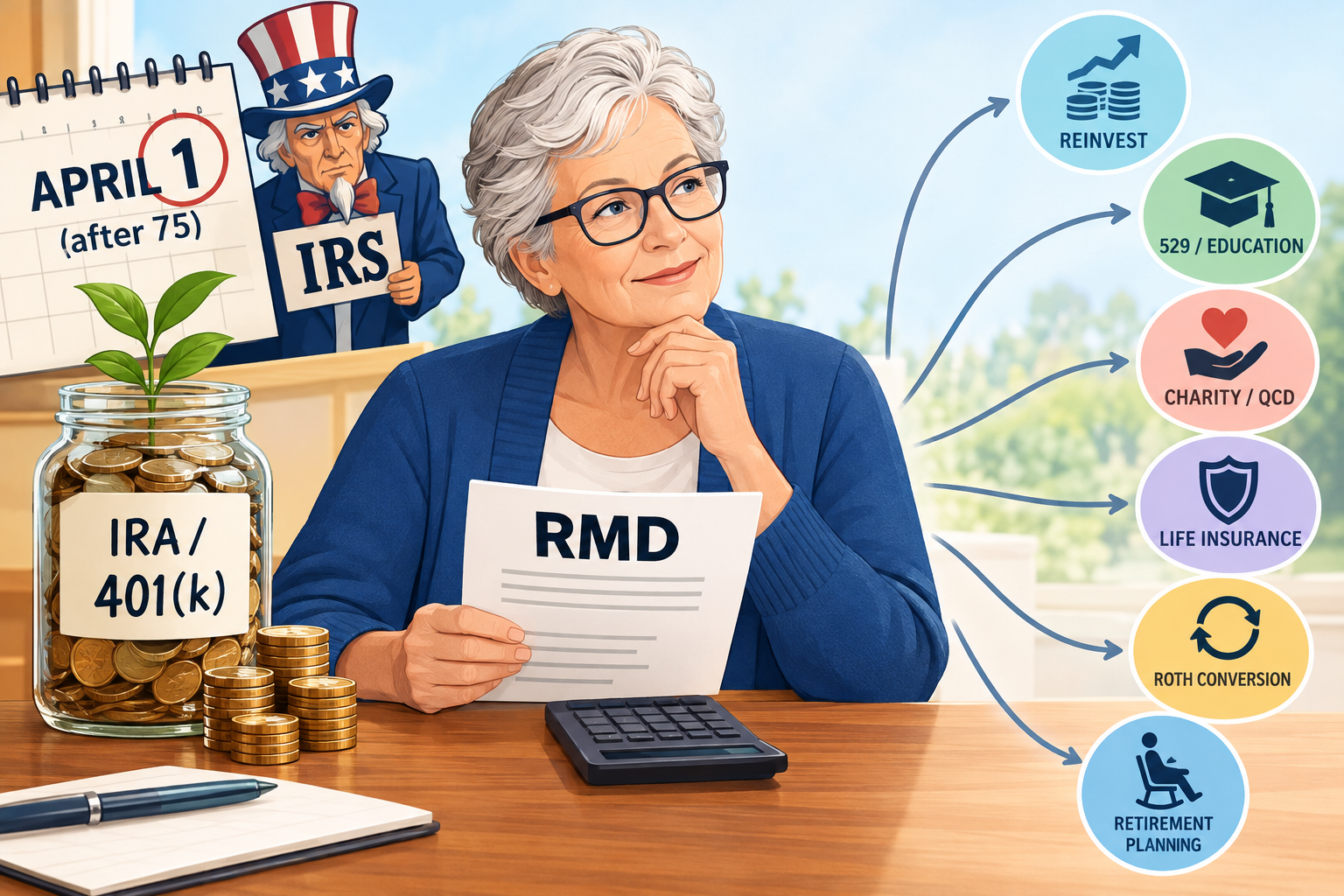
Of course, as Franklin said, “Nothing is certain except death and taxes.” Uncle Sam wants his cut. By April 1st of the year following the year you turn 75 (it used to be 70 but they raised it 2 years ago), you are required to take a Required Minimum Distribution (RMD). If you are still working and participating in a workplace retirement plan, you may be able to delay RMDs from that plan until the year you retire, unless you own more than 5% of the business sponsoring the plan. Roth IRAs do not require RMDs during the original owner’s lifetime, but beneficiaries of Roth accounts are subject to RMD rules. The RMD is the minimum amount of money that the Internal Revenue Service (IRS) mandates you withdraw each year from tax-deferred retirement accounts, such as traditional IRAs, SEP IRAs, SIMPLE IRAs, 401(k)s, 403(b)s, and other employer-sponsored retirement plans. The purpose of RMDs is to ensure that individuals eventually pay taxes on retirement savings that have grown tax-deferred, rather than allowing these funds to accumulate indefinitely.
The RMD amount is calculated by dividing the account balance as of December 31st of the previous year by a life expectancy factor provided by the IRS in the Uniform Lifetime Table. For example, if you are 73 and have $500,000 in an IRA, and your spouse isn’t 10 years younger than you (you’re not a cradle robber), your RMD would be $500k divided by 26.5 or $18,867,92. That denominator decreases by about 1% per year, until age 90 when it decreases by less each year. If you have multiple tax-deferred accounts, RMDs must generally be calculated separately for each account, though some plans allow aggregation for certain types of accounts. You can withdraw more than the minimum, but failing to take the full RMD can result in a penalty of up to 25% of the amount not withdrawn.
Withdrawals from RMDs are generally included in ordinary taxable income, except for amounts that were already taxed (your basis) or qualified distributions from Roth accounts, which may be tax-free. You will pay income taxes on the RMDs. Planning RMDs carefully can help manage your taxable income and retirement cash flow effectively.
If you need your RMD to pay for your living expenses in retirement, it should be one of the first sources you draw from since you’re required to take that money. However, if you don’t need it to pay for living expenses, you can use your RMD in a number of ways.
You could reinvest the cash into a taxable account so it continues to have the opportunity to grow. Or, if you want that money to go to others, you can open or contribute to a 529 account for your grandchildren or even help your adult children “max out” their IRAs. In fact, you can give up to $19,000 per recipient in 2026 without incurring any gift taxes.
Additionally, if you’re 70½ or older, you can make a qualified charitable distribution (QCD) by transferring assets directly from your IRA to a qualified charity. A QCD can satisfy all or part of your RMD from your IRA, and you can exclude up to $111,000 of QCDs from your taxable income per taxpayer in 2026, which can help lower your tax bill.
You may consider using your RMD to cover life insurance costs. You can put this money into an irrevocable life insurance trust, which provides estate tax benefits and lets you avoid gift taxes.
You can also reduce future RMDs by converting assets to a Roth account. While taxes will apply on the converted amount, RMDs will not be required in the future. If you’re still working, you may be able to roll assets subject to an RMD into your current employer plan. RMDs from your current employer plan are generally not required until April 1st after the year you retire. You might take distributions before age 73 and/or take larger distributions in years you are in a lower tax bracket. Future RMDs will be lower, and you may be able to reduce your taxes.
Converting to a Roth account will mean you will have to pay the taxes now instead of when you would otherwise take an RMD. The pay-back period for the current payment of taxes may not be beneficial. You need to calculate that payback period. There is another trap. If your income goes up in any year, the Income-Related Monthly Adjustment Amount (IRMAA) could increase your Medicare payments. IRMMA is an additional charge on top of standard Medicare Part B (medical insurance) and Part D (prescription drug plan) premiums. It applies to beneficiaries whose modified adjusted gross income (MAGI) from two years prior exceeds certain thresholds, as reported on their federal tax returns. IRMAA ensures that higher-income individuals contribute more toward Medicare costs.