

The New York Blood Center Enterprises (NYBCe) will formally open its new blood donor center on Tuesday at the old Avon property on 601 Midland Avenue. NYBCe is a non-profit blood bank that supplies blood to approximately 200 hospitals in the Northeastern United States.
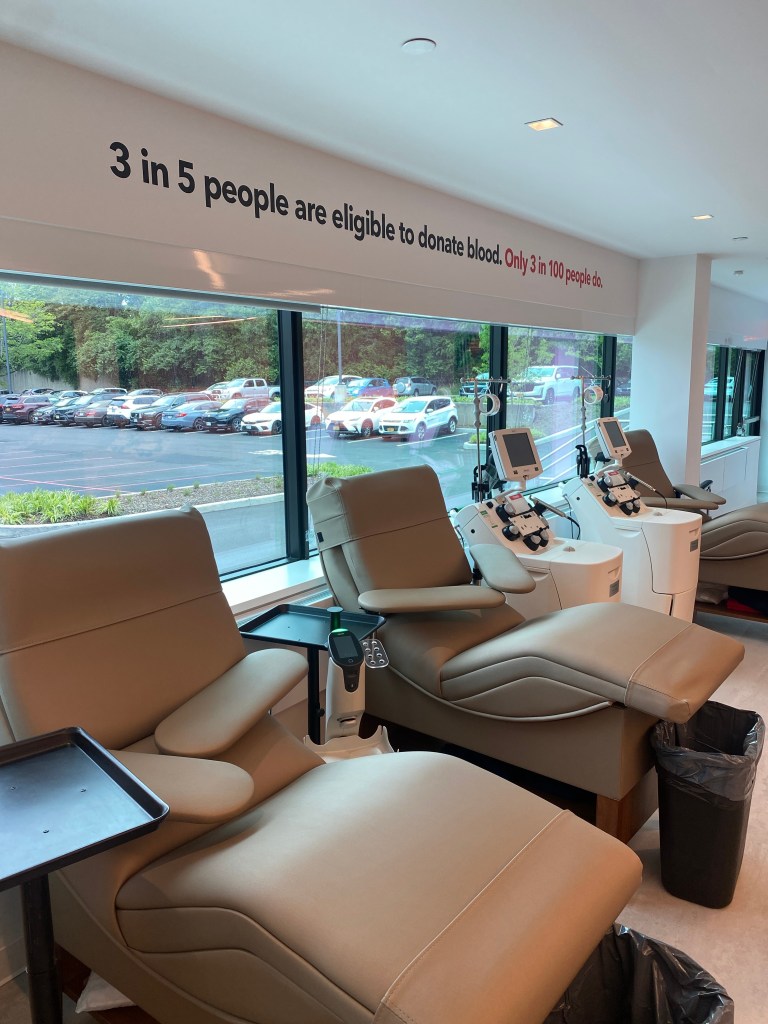
The NYBCe will have 1,000 employees at the new 187,000 square foot campus. Six hundred employees will be using the labs and offices and another 300+ drivers and mobile center employees will use Rye as a home base. One of the largest community-based, non-profit blood collection and distribution organizations in the United States, they will be opening a 4,000 square foot donor center on the Rye campus with 14 donor beds, four medical history rooms, and four cell collection rooms.
NYBCe is a “$600M+/yr multi-faceted life sciences organization with global reach and worldwide recognition for its high humanitarian impact, R&D, and commercialization strategies” and “serves 75M+ people and 400+ hospitals, research organizations, academic institutions, and biomedical companies in nearly 45 countries”.
Old Avon Property and New Owner & Tenant
Avon, who had used the property since the early 1950s, announced it would sell the building in 2018. George Comfort & Sons, whose CEO Peter S. Duncan is a Rye resident, bought the building in 2019. The property was formerly used as a warehouse and distribution center for Avon and was later converted into Avon’s data center and accompanying office space.
George Comfort & Sons worked with law firm McCullough, Goldberger & Staudt, LLP in obtaining zoning and planning commission approvals for the new use of the property. Some residents had expressed concerns about the rezoning of the property. McCullough, Goldberger & Staudt, LLP is also working with The Osborn retirement home on its expansion plans.

New York Blood Center Enterprises
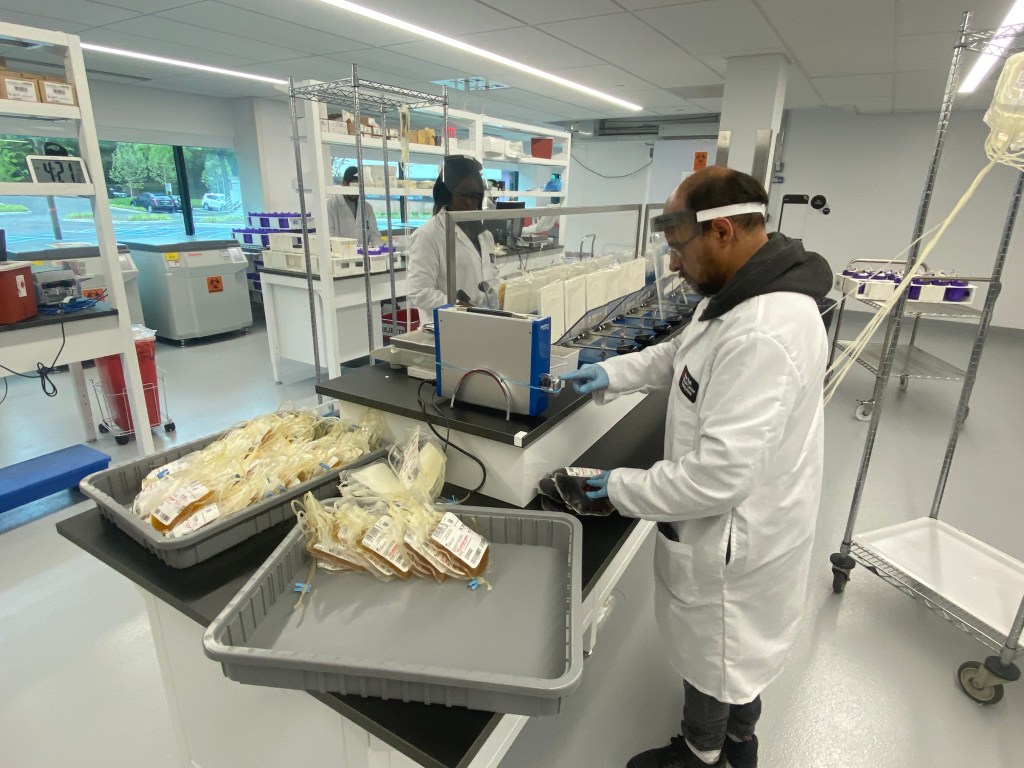
The NYBCe signed its 30+ year lease in 2022, and broke ground in 2023 on the new facility. The NYBCe said George Comfort & Sons had made property improvements, especially along Midland Avenue, to mitigate flooding – both with plantings and parking lot design. The building has also been completely renovated with new windows and purpose built labs, shipping and warehouse facilities.
The Rye campus is a consolidation of multiple locations in the tri-state area, notably a large campus in Long Island City and a location in Elmsford. The group also maintains a research institute in Manhattan and most of those employees will finish moving to the Rye location this month. NYBCe may keep the Manhattan location but others are closing or have been closed and consolidated onto the Rye campus.
Employees are traveling to Rye from New Jersey, all the boroughs of New York City, Long Island, Connecticut and the Hudson Valley. The group expects some turnover because of the move impacting commutes and have been hiring locally.
“Any position that we replace, first choice is 100% local,” said Senior Vice President, Corporate Communications & Public Affairs Andrea H. Cefarelli.
The 900 – 1,000 employees are – roughly:
- 30-35% in the field collecting blood
- 10% drivers
- 25% lab – researchers to processing blood
- 12% back office – finance, legal
- 10% account managers who set up blood drives
- 10% others including employees working with hospitals on comprehensive blood solutions and PAT
Post Pandemic Reinvention
Blood collection is undergoing a reinvention post pandemic. High schools have largely stopped blood drives post pandemic – many of the nurses and administrators have turned over. Employer blood drives have also changed dramatically due to so many people working from home. Blood collection was 75% mobile collection (think about a blood drive) and 25% fixed fix (think donor center) pre-COVID, 100% fixed site during COVID and now 65% mobile and 35% fixed site post COVID but with still now with historically low supply.
One thing this means is groups like NYBCe are investing in renovated and larger blood collection centers like its new Rye donor center. They will also arrange private blood drives for companies and groups with as few as thirty donors.