

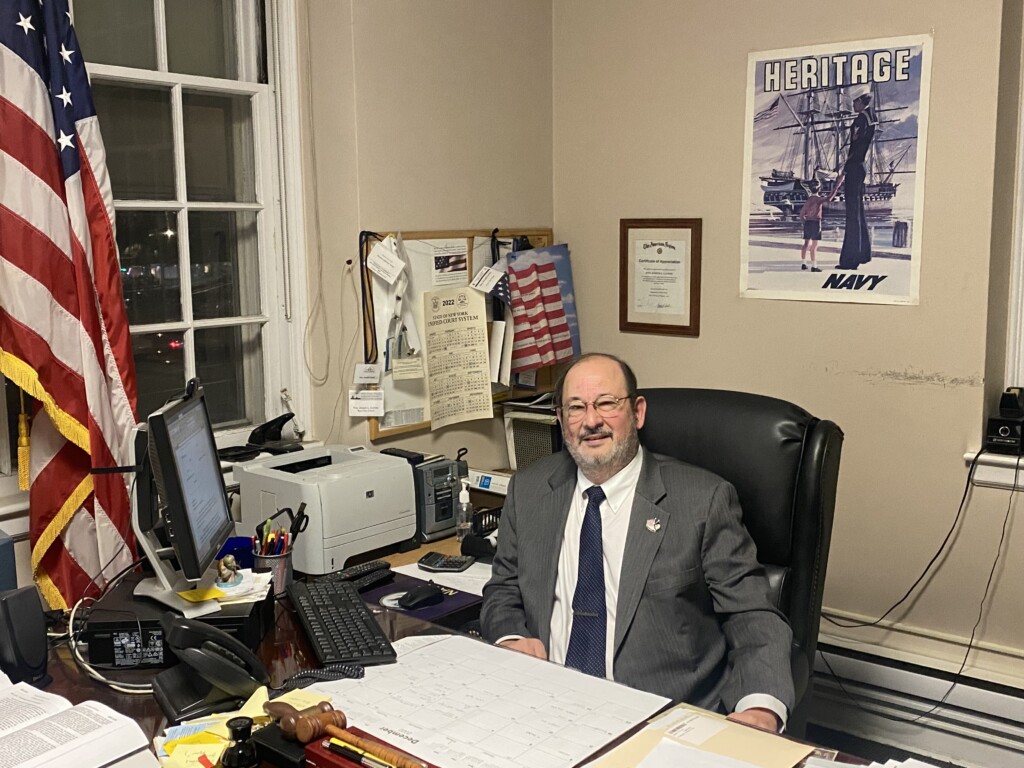
Holding Court is a column by retired Rye City Court Judge Joe Latwin. Latwin retired from the court in December 2022 after thirteen years of service to the City. Latwin appeared on Episode 8 of Season 1 of our podcast MyRye.com Conversations with Doug French. Listen to learn more about Latwin and the Rye City Courts.
What topics do you want addressed by Judge Latwin? Tell us.
Preliminary hearings
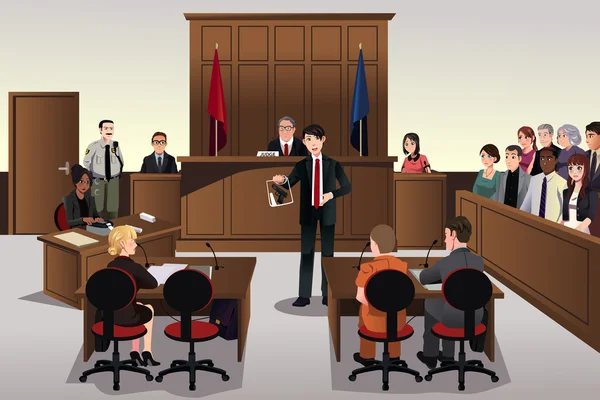
There has been much in the recent news about preliminary hearings, especially in connection with the murder of Charlie Kirk. A preliminary hearing follows the filing of a felony complaint and arraignment of the defendant.
In New York, a preliminary hearing is also known as a felony hearing. It is governed by Criminal Procedure Law §180. Its purpose is to determine if there is sufficient evidence to hold a defendant for grand jury action. The sole issues at preliminary hearing are whether there is reasonable cause to believe there was a crime committed and whether there is reasonable cause to believe the defendant is the one that committed that crime. Because of the limited issues, most preliminary hearings are brief with minimal testimony. For instance, the DA may call only the arresting officer that can identify the defendant as the one who sold the drugs and present the lab reports identifying the weight and identity of the drugs sold. That may be enough. You don’t need proof beyond a reasonable doubt.
The prosecutor may avoid the holding of a preliminary hearing by presenting evidence to a grand jury and obtain an indictment.
The district attorney must conduct such hearings on behalf of the people. The defendant may as a matter of right be present at such hearing. To start, the court must read to the defendant the felony complaint and any supporting depositions unless the defendant waives such reading. Each witness must testify under oath. Each witness, including any defendant testifying on his own behalf, may be cross-examined. The people must call and examine witnesses and offer evidence in support of the charge. The defendant may, but need not testify on his own behalf. The court may, as a matter of discretion, upon request of the defendant, permit him to call and examine other witnesses or to produce other evidence on his behalf.
Only non-hearsay evidence is admissible to demonstrate reasonable cause to believe that the defendant committed a felony; except that reports of experts and technicians in professional and scientific fields are admissible to the same extent as in a grand jury proceeding, unless the court determines, upon application of the defendant, that such hearsay evidence is, under the particular circumstances of the case, not sufficiently reliable, in which case the court must require that the witness testify in person and be subject to cross-examination.
Upon application of the defendant, the court may exclude the public from the hearing and direct that no disclosure be made of the proceedings.
Such a hearing should be completed at one session, but may be adjourned by the court, but not for more than one day.
At the end of a hearing, the court must dispose of the felony complaint by ordering the defendant be held for the action of a grand jury and transmitting the case to
the appropriate superior court, if there is reasonable cause to believe that the defendant committed a felony. If there is no reasonable cause to believe that the defendant committed a felony but there is reasonable cause to believe that he committed an offense other than a felony, the court may reduce the charge to one for such non-felony offense.
If there is no reasonable cause to believe that the defendant committed any offense, the court must dismiss the felony complaint and discharge the defendant from custody.
A defendant may ask for a preliminary hearing in the hope that the DA can’t proceed, in which case the defendant gets released from custody.
A defendant may also seek a preliminary hearing to test the evidence of the DA and see what evidence he has. It also locks in some of the witnesses’ testimony and may be grist for cross examination at trial by showing inconsistent or different answers. Most of the time, a defendant will not offer any witnesses since it is only a question of was there reasonable cause to believe a felony was committed and the defendant was the one that did it, not weighing conflicting evidence.