

Holding Court is a series by retired Rye City Court Judge Joe Latwin. Latwin retired from the court in December 2022 after thirteen years of service to the City.
What topics do you want addressed by Judge Latwin? Tell us.
By Joe Latwin
Porno
One of the functions of the Legislature is to amend or pass laws to remedy defects pointed out in court decisions. A recent case calls out for remediation.
In People v. Sherlock, the New York Court of Appeals was called on to determine what law dealing requiring sex offenders to register required. Sherlock was convicted in federal court of possession of child pornography. The clear and unambiguous language of New York’s Correction Law defines a sexually violent offense as one based on a “conviction of a felony in any other jurisdiction for which the offender is required to register as a sex offender in the jurisdiction in which the conviction occurred.” Although federal law requires sex offenders convicted of federal sex offenses to register in each jurisdiction where they live, work or go to school, the law defines “jurisdiction” as a state or territory and contains no requirement that federally-convicted sex offenders register with the federal government. The federal government does not maintain a sex offender registry of the sort that states are required to operate, Sherlock was not required to register as a sex offender in the federal jurisdiction in which his conviction occurred. Moreover, the federal definition of sexually violent offense confirms that those convicted of child pornography possession should be designated as “sex offenders” but not “sexually violent offenders.”
Why should a child pornographer not have to register on the sexual offense registry? It is a matter of the federal and state laws being inadequate. It is a simple fix. The federal government should maintain a sex offender registry – just as it requires states to do for all sexual offenses and it should include and add possession of pornography to those within “sexual violent offenders”. New York should amend the Correction Law to require registration by those convicted in federal court of child pornography. Our Representative and State Assemblyman should get on this and fix this gap.
Zoning
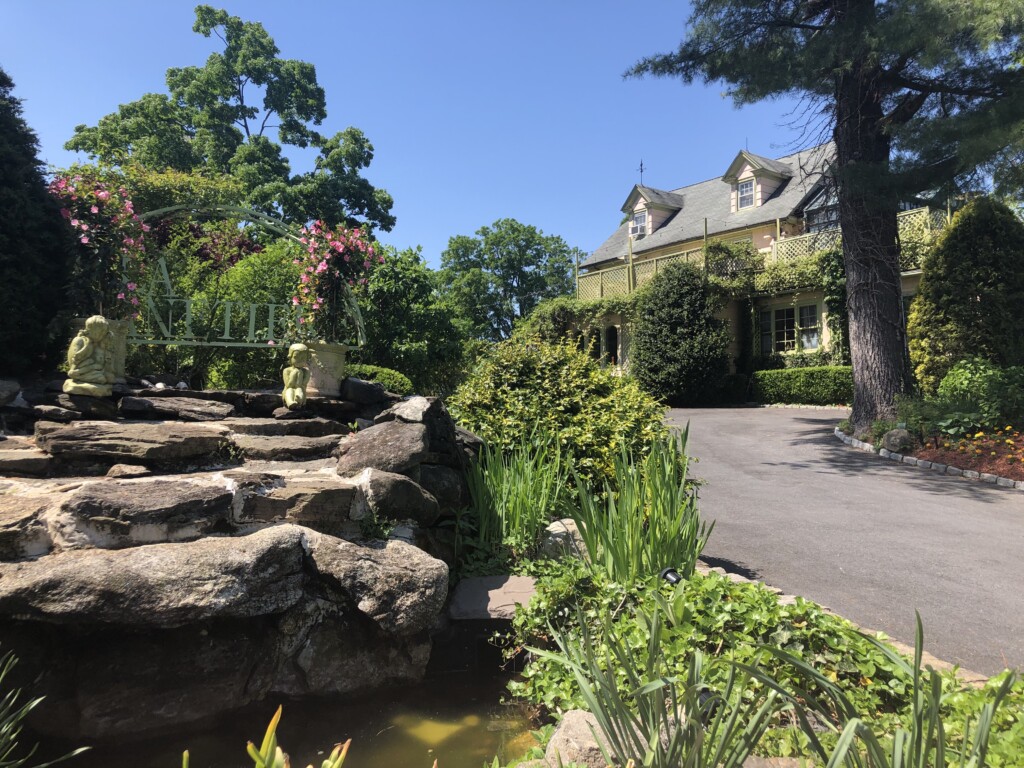
Many of our readers are familiar with the property at the corner of Milton Road and Oakland Beach Avenue. It had been the White Elephant, La Panetiere, and Ocean Blue restaurants. In December 2021, 530 Milton Road, LLC (hereinafter Milton), purchased the restaurant and in January 2022 closed the restaurant to perform renovations. In June 2022, it obtained a permit for interior renovation work. However, that same month, a stop work order halted the renovations because it did not have the necessary permits for certain exterior renovations. After obtaining the necessary authorization renovations were resumed and eventually completed. In November 2022, it was issued a certificate of occupancy, that stated the occupancy of the building was for the “continued use of this building as a restaurant.”
Two Rye residents appealed to the Board of Appeals challenging the issuance of the certificate of occupancy. The Board upheld the issuance of the certificate of occupancy, concluding that the restaurant was a permitted use. The residents filed a CPLR article 78 to review the Board’s determination. The Supreme Court denied the petition and dismissed the proceeding. The residents appealed.
The Appellate Division found that judicial review of a challenged zoning board determination is generally limited to assessing whether the zoning board’s determination was illegal, arbitrary and capricious, or an abuse of discretion. While the zoning board of appeals is authorized to interpret code requirements, and is entitled to great deference, where the issue involves pure legal interpretation of statutory terms, deference is not required and the court is free to ascertain the proper interpretation from the statutory language and legislative intent. Because the zoning board concluded that the restaurant use was a permitted use, it did not consider the question of whether the restaurant use may still warrant the issuance of a certificate of occupancy on the ground that it is a preexisting nonconforming use or whether that preexisting nonconforming use lapsed due to the work. The case was remitted to the zoning board for a determination on that issue. This case is imbued with people with ties to Rye. One of the challenging residents is a resident and was on the Board of Assessment Review, the attorney for the zoning board represented Rye as its prosecutor in Rye City Court. The attorney for the restaurant is a Rye resident and local attorney and was a member of the zoning board.